Toxic plants have a tendency to show up inside animals’ stomachs and
therefore, toxic plants also have a tendency to show up on veterinary
board exams.
The contents of the cecum are dry and cheesy (much like board review study material)
Ok, admittedly this is a tough question, but we do not want to make them too easy.
"Ok ladies and gents, it is time to beat to DEATH the cranial. cruciate. ligament. rupture. All right this lecture might go a little longer than others, but it's going to be worth it, it's going to be glorious."*
"So
at this point you're probably on the verge of tears, and you no longer
want to ever think about neurology again, and you're probably
considering a career as a baker."
Suture material can be very exciting if you let it be.
"In this PowerLecture we are going to KILL patellar luxations."
Remember: with hypothyroidism dogs become fat, lazy, heat seeking missiles of skin disease.
"Okay everyone, let's conquer pelvic fractures once and for all."
UV light is not thought to play a
significant role in development of these tumors as they tend to occur in
the area where the sun does not shine.
Sorry, it's a human health question,
but it is a potential biochemical warfare agent and the public expects
veterinarians like you to know this.
Of note, all Clostridia are
categorized as gram positive organisms with the exception of Clostridium
piliforme, which is gram negative (yes, Microbiology is confusing).
Cryptococcus is also not a contagious
disease (do NOT confuse this with cryptosporidium, which is very
contagious and zoonotic as several of my colleagues can attest to
profusely).
This is the perfect random question.
The fun fact to remember is that Cornish rex, British short hair, and
Devon rex cats are predisposed to having Type B blood type.
---
*In case you are wondering, the ones I put quotations around are verbal quotes from recorded lectures, while the others are copy-pasted from the answer pages of multiple choice questions.
Showing posts with label Miscellaneous. Show all posts
Showing posts with label Miscellaneous. Show all posts
Saturday, 5 December 2015

Friday, 4 December 2015
To All The Unsung Blog Posts - Part 2
More not-quite-stories from final year!
- Imaging roster was known as "radi-holiday" and "radiation vacation." It was supposed to be a total laid-back easy peasy week. Totally not the case. The surgeon most notorious out of all surgeons for making students cry and break had recently decided to forget about surgery and do a radiology residency. Also, there was nothing more boring in all of final year than standing around for three hours in a dark room with 5 other students, no sitting room, watching the two residents painstakingly repeat and record every step of an abdominal ultrasound that should have taken twenty minutes.
- During equine rotation, some of our days were very slow, and one of the vets had a horse competing in a race, so the residents actually took us on an outing to a day at the races. We went out in one of the university's minivans, bought fried food, watched them show the horses, cheered for ours, talked about polo, and huddled together from the cold, miserable, windy weather.
- I planned to use for a blog post title: "And Today's Wardrobe Options Are Scrubs or Scrubs."
- I can't remember specifically what the issue was, but I believe it was regarding the horrible hours and work conditions in the small animal hospital. I have a paragraph from a started-and-abandoned blog post that goes: "I of course being the confrontational go-getter that I am, made sure something got done about it by writing a mildly worded email to our class rep... after her prompting me to do so."
- My very last day of surgery rotation ever, a Friday, saw a dog come in at 3:30pm that had been hit by a car. I did the initial exam, and then stayed with the dog as he was stabilised and transferred to anaesthesia. Surgery started at 7pm. I got home and had dinner at 10:30pm.
- One of my last rosters was the SPCA. Most people had this earlier in the year, which would have been much more valuable, because you cover some surgery basics and get to try a few speys and neuters. During my week, they were doing a "desexathon." Free or low-cost (can't remember) desexing for pet cats in the area, to help control stray populations. Which is very worthwhile, because at least half of them were pregnant, and with 30-50 speys in a day, that's a lot of unwanted kittens. The sucky part is that because these were owned pets, the shelter wouldn't let us do anything. So I spent the entire week standing in a corner watching them do speys. Bear in mind this is a month before I qualified as a vet.
- Imaging roster was known as "radi-holiday" and "radiation vacation." It was supposed to be a total laid-back easy peasy week. Totally not the case. The surgeon most notorious out of all surgeons for making students cry and break had recently decided to forget about surgery and do a radiology residency. Also, there was nothing more boring in all of final year than standing around for three hours in a dark room with 5 other students, no sitting room, watching the two residents painstakingly repeat and record every step of an abdominal ultrasound that should have taken twenty minutes.
- During equine rotation, some of our days were very slow, and one of the vets had a horse competing in a race, so the residents actually took us on an outing to a day at the races. We went out in one of the university's minivans, bought fried food, watched them show the horses, cheered for ours, talked about polo, and huddled together from the cold, miserable, windy weather.
- I planned to use for a blog post title: "And Today's Wardrobe Options Are Scrubs or Scrubs."
- I can't remember specifically what the issue was, but I believe it was regarding the horrible hours and work conditions in the small animal hospital. I have a paragraph from a started-and-abandoned blog post that goes: "I of course being the confrontational go-getter that I am, made sure something got done about it by writing a mildly worded email to our class rep... after her prompting me to do so."
- My very last day of surgery rotation ever, a Friday, saw a dog come in at 3:30pm that had been hit by a car. I did the initial exam, and then stayed with the dog as he was stabilised and transferred to anaesthesia. Surgery started at 7pm. I got home and had dinner at 10:30pm.
- One of my last rosters was the SPCA. Most people had this earlier in the year, which would have been much more valuable, because you cover some surgery basics and get to try a few speys and neuters. During my week, they were doing a "desexathon." Free or low-cost (can't remember) desexing for pet cats in the area, to help control stray populations. Which is very worthwhile, because at least half of them were pregnant, and with 30-50 speys in a day, that's a lot of unwanted kittens. The sucky part is that because these were owned pets, the shelter wouldn't let us do anything. So I spent the entire week standing in a corner watching them do speys. Bear in mind this is a month before I qualified as a vet.
Thursday, 3 December 2015
To All The Unsung Blog Posts - Part 1
I had many interesting ideas for posts that never got written. Here's a slew of the most interesting snippets that never made it to the light.
---
- At a small animal clinic, during one exam there was this very cute little kid who was really into learning about everything that was going on. The vet had a kiddie stethoscope to give him, and he spent the rest of the exam listening to everything--the dog, his parents, himself, the table. The first time he put it on, he put it in his ears backwards, and after being corrected, was very concerned about getting it right every time after that. He kept interrupting to ask "Is it on right?" before listening to another inanimate object.
- One of my classmates fostered a paralysed dachshund that came through the hospital. The dog had a little mini wheelchair, and hung out with us in the student lounge. She was very friendly and would wheel around and get stuck on things.
- While on emergency rotation, a dog came in critically ill. I spent several hours with the team, participating in a small part of monitoring while they performed lots of dramatic procedures. At one point, I got sent to run down the hall to the lab, to see if we had results back on clotting times. They weren't back, and in the 5 minutes I was gone, the dog died.
- We toured a deer farm and a pig farm, which were really cool, but don't make for interesting stories. Though one of the techniques at the pig farm to tell if the feed mixer is doing a good job, is to drop in a bunch of sprinkles and look at their distribution in the final product.
- To prepare us for dealing with clients, we had to break into groups with an actor assigned to each group. We had several scenarios, and had to practice things like delivering bad news or dealing with an angry client. Some of the actors were apparently quite difficult! All of this was recorded so we could study it later. My group was a bunch of pansies and nobody would volunteer, so I ended up going twice.
- On our public health roster, we took tours of several meatworks--beef, lamb, and poultry facilities. While much of my class hated this, I actually found it fascinating. Everything was so clean and orderly. Plus we got to walk through the chiller, where the stripped carcasses hang on slow conveyor belts like we were in a horror movie.
- I'm not sure I ever talked about our naked calendar, one of the fundraisers for Halfway Day. I'm not sure what I did with the photos from my group, but you can check out the current Barely There calendar website for general photos, and maybe even support the current third years! Updated every year by the new class.
---
- At a small animal clinic, during one exam there was this very cute little kid who was really into learning about everything that was going on. The vet had a kiddie stethoscope to give him, and he spent the rest of the exam listening to everything--the dog, his parents, himself, the table. The first time he put it on, he put it in his ears backwards, and after being corrected, was very concerned about getting it right every time after that. He kept interrupting to ask "Is it on right?" before listening to another inanimate object.
- One of my classmates fostered a paralysed dachshund that came through the hospital. The dog had a little mini wheelchair, and hung out with us in the student lounge. She was very friendly and would wheel around and get stuck on things.
- While on emergency rotation, a dog came in critically ill. I spent several hours with the team, participating in a small part of monitoring while they performed lots of dramatic procedures. At one point, I got sent to run down the hall to the lab, to see if we had results back on clotting times. They weren't back, and in the 5 minutes I was gone, the dog died.
- We toured a deer farm and a pig farm, which were really cool, but don't make for interesting stories. Though one of the techniques at the pig farm to tell if the feed mixer is doing a good job, is to drop in a bunch of sprinkles and look at their distribution in the final product.
- To prepare us for dealing with clients, we had to break into groups with an actor assigned to each group. We had several scenarios, and had to practice things like delivering bad news or dealing with an angry client. Some of the actors were apparently quite difficult! All of this was recorded so we could study it later. My group was a bunch of pansies and nobody would volunteer, so I ended up going twice.
- On our public health roster, we took tours of several meatworks--beef, lamb, and poultry facilities. While much of my class hated this, I actually found it fascinating. Everything was so clean and orderly. Plus we got to walk through the chiller, where the stripped carcasses hang on slow conveyor belts like we were in a horror movie.
- I'm not sure I ever talked about our naked calendar, one of the fundraisers for Halfway Day. I'm not sure what I did with the photos from my group, but you can check out the current Barely There calendar website for general photos, and maybe even support the current third years! Updated every year by the new class.
Wednesday, 2 December 2015
I Thought I Didn't Want To Do Blogging
I love the irony that my last post was all about how I had free time again and was promising to catch up on all my blog posting. Cue a full year of no blog posting.
I had somewhat of an internal struggle. I am a bit obsessive about things, and I felt it crucial to get down every interesting event that happened to me in vet school. Part of that is because this blog functions like a journal, and hey, I want to remember all this stuff that happened to me. Most of it is because I'm obsessive and don't like things getting left out.
The problem that arose from this is I developed a huge list of topics and stories to write about, backlogged by over a year. Funny lab stories from 3rd year when I was in the middle of 5th year. Things that happened in 4th year finals that had been just the other week when I put them on my list, and ended up four months down the road by the time I got to them. It was unpleasant to deal with. I got to resent it, and hated writing blog posts, because it meant slogging through months of backlogged ideas, and typing up a story I'd already grown bored with. So I figured, if I hate blogging so much, I shouldn't force myself to do it.
I also tried to rationalise this further. One of my main inspirations for starting the blog in the first place was so I'd have a place to write down funny or touching stories when I got out into practice. Quirky clients, weird cases, positive things I want to remember. Then I thought, well, what about client confidentiality? I live in a pretty rural area. Maybe I'd get in trouble with work, or with clients, or with the state, if someone figured out I typed up a story about them. Never mind that I read a slew of other veterinary blogs written by other veterinarians, who don't have a problem, because things are kept very vague.
Not to mention I spent several months living with my parents or my husband's parents, looking for work. No stories to be found there, really.
So. what happened? Well, as you do, I wandered back and started reading some of my old stories, after it came up in conversation. And I started thinking... hey, some of these are funny. I'm glad I wrote these down. I'd forgotten about this or that. Maybe it's worth keeping track of these things, after all.
Now there's the risk of me obsessively wanting to catalogue every unusual experience I've had over the past six months, but I'm going to make a new rule: write down stories as I think of them, with no regard to chronology, and with no pressure. That probably seems obvious to you, and I'm sure it's how actual effective bloggers operate, but my little OCD brain needs to be given permission to not write a blog like a freaking textbook.
Here's hoping for a future of consistent posting and interesting tales!
I had somewhat of an internal struggle. I am a bit obsessive about things, and I felt it crucial to get down every interesting event that happened to me in vet school. Part of that is because this blog functions like a journal, and hey, I want to remember all this stuff that happened to me. Most of it is because I'm obsessive and don't like things getting left out.
The problem that arose from this is I developed a huge list of topics and stories to write about, backlogged by over a year. Funny lab stories from 3rd year when I was in the middle of 5th year. Things that happened in 4th year finals that had been just the other week when I put them on my list, and ended up four months down the road by the time I got to them. It was unpleasant to deal with. I got to resent it, and hated writing blog posts, because it meant slogging through months of backlogged ideas, and typing up a story I'd already grown bored with. So I figured, if I hate blogging so much, I shouldn't force myself to do it.
I also tried to rationalise this further. One of my main inspirations for starting the blog in the first place was so I'd have a place to write down funny or touching stories when I got out into practice. Quirky clients, weird cases, positive things I want to remember. Then I thought, well, what about client confidentiality? I live in a pretty rural area. Maybe I'd get in trouble with work, or with clients, or with the state, if someone figured out I typed up a story about them. Never mind that I read a slew of other veterinary blogs written by other veterinarians, who don't have a problem, because things are kept very vague.
Not to mention I spent several months living with my parents or my husband's parents, looking for work. No stories to be found there, really.
So. what happened? Well, as you do, I wandered back and started reading some of my old stories, after it came up in conversation. And I started thinking... hey, some of these are funny. I'm glad I wrote these down. I'd forgotten about this or that. Maybe it's worth keeping track of these things, after all.
Now there's the risk of me obsessively wanting to catalogue every unusual experience I've had over the past six months, but I'm going to make a new rule: write down stories as I think of them, with no regard to chronology, and with no pressure. That probably seems obvious to you, and I'm sure it's how actual effective bloggers operate, but my little OCD brain needs to be given permission to not write a blog like a freaking textbook.
Here's hoping for a future of consistent posting and interesting tales!
Thursday, 20 November 2014
I Finished Vet School Today
At 3:30pm, I walked out of my final exam of vet school, and left the small animal hospital for the last time (because I handed in my access card immediately afterwards)!
Here's what I said on facebook:
It's been a full MONTH of studying for me, and it's not over yet. I still have to hardcore study for the next two weeks, then drive to Auckland for the seven hour computer based North American Licensing Exam. But then at long last I can breathe a sigh of relief, visit the South Island, and fly home and see my dogs and family!
And, let's not forget the most important part:
After five years, I am now a veterinarian.
Here's what I said on facebook:
THAT'S IT LAST EXAM VET SCHOOL DONE.Now that I have time, I promise to update the blog and fill you in on exams and rosters and everything exciting that's been happening. I may sneakily add posts into the "past" so they fit chronologically. I have so many notes and experiences to catalogue!
Vet school has become such a state of being it's hard to imagine actually being finished. No more lectures, treatments, missing lunch and dinner at the small animal hospital, falling asleep in rounds, running back and forth between radiology/surgery/ICU, getting cold and wet in a paddock, trying to make sense of the insides of a cow, pretending to know something about horses, hesitantly checking ESS feedback, endless hours at the large animal teaching unit, dressing up for all the costume parties, writing presentations practically every week, ten thousand assignments, walking 3-legged dogs in circles, yelling at Cornerstone while trying to do paperwork, struggling to get red book signatures, cluelessly palpating muddy sheep, oral exams, and a hundred other things.
I can actually sleep and have meals and hobbies for a change. No more sitting around studying every night, or feeling guilty about not studying every night (for a few days at least...) Phew, I can't believe it's actually over!
It's been a full MONTH of studying for me, and it's not over yet. I still have to hardcore study for the next two weeks, then drive to Auckland for the seven hour computer based North American Licensing Exam. But then at long last I can breathe a sigh of relief, visit the South Island, and fly home and see my dogs and family!
And, let's not forget the most important part:
After five years, I am now a veterinarian.
Monday, 8 September 2014
Fifth Year In A Nutshell
Yesterday I got to sleep in and get home early. I didn't get up until 6:45am and I got home at 5:30pm.
I still fell asleep on the couch. At 7:30pm.
I still fell asleep on the couch. At 7:30pm.
Sunday, 31 August 2014
I Had Hobbies Once
Assignment Checklist:
Poisonous plants project turned in.
4 person group project about handling a disaster turned in (we picked earthquake).
2 person group assignment about practice management turned in.
Last case report finished. (4 production, 2 equine)
Small animal disease client information handout finished.
Veterinary code of conduct assignment done.
Personality test assignment done (yes, they really made us do that).
4 person meatworks assignment out of the way.
Peer review of other groups' meatworks assignment finished.
Small animal surgical report, discharge instructions, anaesthetic record, and SOAP all signed off.
Red book skills 95% signed off.
Grand Rounds case presented to the department and done forever.
To do:
Public health case report.
Study for boards.
There is light at the end of the tunnel!
Poisonous plants project turned in.
4 person group project about handling a disaster turned in (we picked earthquake).
2 person group assignment about practice management turned in.
Last case report finished. (4 production, 2 equine)
Small animal disease client information handout finished.
Veterinary code of conduct assignment done.
Personality test assignment done (yes, they really made us do that).
4 person meatworks assignment out of the way.
Peer review of other groups' meatworks assignment finished.
Small animal surgical report, discharge instructions, anaesthetic record, and SOAP all signed off.
Red book skills 95% signed off.
Grand Rounds case presented to the department and done forever.
To do:
Public health case report.
Study for boards.
There is light at the end of the tunnel!
Thursday, 21 August 2014
Horse Dancing is a Thing
I had a vague understanding that dressage is a thing, but I never realised that they sometimes do it to music.
This interview by Stephen Colbert basically sums up the conversation we had this afternoon during some downtime on equine roster.
This interview by Stephen Colbert basically sums up the conversation we had this afternoon during some downtime on equine roster.
Saturday, 12 July 2014
Overseas Adventures
You might have noticed a lack of posts in May and June, and attributed it to the fact that I tend not to post for large periods of time. That actually wasn't the case, and in my defense, I never forget to post, I just get too busy or too tired. This time, I was overseas doing some externships at clinics in the northeastern US.
The first clinic I was at is a small animal general practice, so you'd think it would be pretty similar to my other weeks at local small animal practices. It wasn't.
I don't know how common this is in the states since I haven't been to as many practices there, but this place was doing high-end medicine. They don't just have digital xrays and ultrasound, they have chemotherapy, phsyical therapy (including a water treadmill), nutrition specialists, behaviour experts, endoscopy, and more. They do complex surgeries, not quite up to the level of a referral surgery service, but do perform many procedures that other practices would refer. The vets there are all extremely knowledgable. The practice also places a lot of emphasis on client communication and building client relationships, so they had lots of tips to share with me in the "soft skills" department as well. They even called up the Humane Society and had them send over a bunch of speys and neuters for me and my classmate! Our university doesn't even do that.
The other clinic I visited was a specialist clinic. They had multiple internal medicine specialists and boarded surgeons, as well as a regular oncologist, cardiologist, and a few other bits and bobs. That was a step away from the world of general practice, and delving into "What life is like as a specialist." I decided I probably don't want to be a specialist, but they do see some seriously cool stuff. The most memorable was a pair of 20-something-year-old Capuchin monkies that are trained to help blind people (and they do a LOT of neat things for them). It was interesting seeing the different personality types in the different specialties, and to go more in depth in the cases.
It's hard to form a post for a six week period. I did so many things its hard to remember them all, let alone pick some to write about. It was a mix of busy days and sightseeing. I reinforced a ton of my pharmacology and medicine, and got to do quite a few routine surgeries. One thing I noticed (I'm not sure if this is a regional difference, or just luck of the draw with cases), was the large number of pets on the same anti-anxiety meds as people, like Prozac and Xanax. There are different diseases and disease prevalences there, which was an interesting challenge. New Zealand doesn't have rabies, heartworms, ticks, or tick-borne diseases, which are all important in the US and part of standard medicine (eg annual vaccinations and testing). Also, the drugs they have are different, which is tough to remember sometimes.
The best thing about getting away and doing some externships was regaining joy and enthusiasm for veterinary medicine. Hospitals are run very differently to private practices, especially university hospitals. At school, we students are used as free labour for a lot of menial tasks that take away from our time and energy to focus on the medicine itself, things like doing redundant paperwork for the computer system or nursing care for all of our patients (which would be fine if I were at vet nursing school). The clinicians are so used to students, we're just "another one" to them, and they probably get tired of the same mistakes over and over. We have skills books that they need to sign, and we have to chase them down the halls on Friday afternoons before they'll finally, grudgingly give up a signature.
At a private clinic that doesn't see many students, they cared a lot more about my individual learning. They had the approach of, "What can we get you to do? What skills do you need signed off? Let's see if we can organise something for you." My spare time consisted of reading and discussing cases, instead of picking up poop and ice-packing surgical wounds. The biggest difference was that the vets treated me and my classmate like colleagues, rather than students. They asked our opinions on things and never talked down to us. It was a positive, collaborative atmosphere, and the things I did were a lot closer to "real" veterinary medicine than my rosters at uni. It was a great boost halfway through the year, because I'd been beginning to doubt my interest or commitment to the profession. Now I believe that's simply due to the warped perspective we get from spending all our time in a teaching hospital.
I feel like I'm not giving my trip decent justice, boiling down six weeks into those two paragraphs! I suppose most of the interesting stuff was case-related, which would involve getting more technical than the blog is intended to be, so I'll leave it at that.
The first clinic I was at is a small animal general practice, so you'd think it would be pretty similar to my other weeks at local small animal practices. It wasn't.
I don't know how common this is in the states since I haven't been to as many practices there, but this place was doing high-end medicine. They don't just have digital xrays and ultrasound, they have chemotherapy, phsyical therapy (including a water treadmill), nutrition specialists, behaviour experts, endoscopy, and more. They do complex surgeries, not quite up to the level of a referral surgery service, but do perform many procedures that other practices would refer. The vets there are all extremely knowledgable. The practice also places a lot of emphasis on client communication and building client relationships, so they had lots of tips to share with me in the "soft skills" department as well. They even called up the Humane Society and had them send over a bunch of speys and neuters for me and my classmate! Our university doesn't even do that.
The other clinic I visited was a specialist clinic. They had multiple internal medicine specialists and boarded surgeons, as well as a regular oncologist, cardiologist, and a few other bits and bobs. That was a step away from the world of general practice, and delving into "What life is like as a specialist." I decided I probably don't want to be a specialist, but they do see some seriously cool stuff. The most memorable was a pair of 20-something-year-old Capuchin monkies that are trained to help blind people (and they do a LOT of neat things for them). It was interesting seeing the different personality types in the different specialties, and to go more in depth in the cases.
It's hard to form a post for a six week period. I did so many things its hard to remember them all, let alone pick some to write about. It was a mix of busy days and sightseeing. I reinforced a ton of my pharmacology and medicine, and got to do quite a few routine surgeries. One thing I noticed (I'm not sure if this is a regional difference, or just luck of the draw with cases), was the large number of pets on the same anti-anxiety meds as people, like Prozac and Xanax. There are different diseases and disease prevalences there, which was an interesting challenge. New Zealand doesn't have rabies, heartworms, ticks, or tick-borne diseases, which are all important in the US and part of standard medicine (eg annual vaccinations and testing). Also, the drugs they have are different, which is tough to remember sometimes.
The best thing about getting away and doing some externships was regaining joy and enthusiasm for veterinary medicine. Hospitals are run very differently to private practices, especially university hospitals. At school, we students are used as free labour for a lot of menial tasks that take away from our time and energy to focus on the medicine itself, things like doing redundant paperwork for the computer system or nursing care for all of our patients (which would be fine if I were at vet nursing school). The clinicians are so used to students, we're just "another one" to them, and they probably get tired of the same mistakes over and over. We have skills books that they need to sign, and we have to chase them down the halls on Friday afternoons before they'll finally, grudgingly give up a signature.
At a private clinic that doesn't see many students, they cared a lot more about my individual learning. They had the approach of, "What can we get you to do? What skills do you need signed off? Let's see if we can organise something for you." My spare time consisted of reading and discussing cases, instead of picking up poop and ice-packing surgical wounds. The biggest difference was that the vets treated me and my classmate like colleagues, rather than students. They asked our opinions on things and never talked down to us. It was a positive, collaborative atmosphere, and the things I did were a lot closer to "real" veterinary medicine than my rosters at uni. It was a great boost halfway through the year, because I'd been beginning to doubt my interest or commitment to the profession. Now I believe that's simply due to the warped perspective we get from spending all our time in a teaching hospital.
I feel like I'm not giving my trip decent justice, boiling down six weeks into those two paragraphs! I suppose most of the interesting stuff was case-related, which would involve getting more technical than the blog is intended to be, so I'll leave it at that.
Tuesday, 8 April 2014
The Things You Go Through For Assignments
We have to write a few case reports this year, and one of the things that we're supposed to include is all the costs to the client. I had a case last week that was in hospital and got euthanised and necropsied on friday. It's been exactly one week since the farm visit, so I figured I could get my hands on the costings today. I never realised it would be such an ordeal.
Just like the other case report I did for a large animal, I went up to farm services and asked nicely for the costings. Last time, they looked up the case and printed it off. This time, they scratched their heads for a while trying to find the case, then scratched their heads for a while trying to find costings. One person asked another who asked another, and eventually they told me it hadn't been done yet.
So I went over to the vet, relayed what I'd been told, and asked for costings. She said the reception should have them. Reception said she should have them. We went out to reception to find them. Turns out they were on 2 different sheets on 2 different desks (one for the farm visit, one for the hospital stay). A nurse kindly offered to type them in right then and print them out for me. Phew! Finally. Thanks for doing that, sorry to bother you.
A few hiccups typing them in meant it took rather a while. The patient sheet was a huge mess because like half a dozen students had tried to write things on it, and of course no one put their notes in any of the correct places. Also someone had given a drug but not told me what exactly they'd drawn up, so I knew it was a vitamin B injection, but not which product it was. Nurse sighed about this, but took it in stride, without much more than a "They never help us" comment.
Then, just as she's about to finish, smack from the printer next to me. Or rather, from the cow vet standing at the printer next to me. He was trying to swipe his town library card instead of his university ID card, so it wouldn't read it or let him print. He got frustrated enough to punch the touch screen, which cracked it. Like, cracks radiating from the centre, covering the entire screen. And guess what--it's a touch screen. Even though the display didn't break, it wouldn't register the touches anymore, so the nurse wasn't able to actually select "print" for her document.
After a bit of a kerfuffel among the receptionists and some eye-rolling behind cow vet's back, the nurse and I headed for the vet tower. The vet tower is under a lot of construction, which means whenever you want to get through the hospital you have to re-route through some strange convoluted path. Eventually, we made it to a printer there, only to find someone in front of us trying to print. On a broken printer.
Fortunately, it turns out that printer only needed paper. Unfortunately, there wasn't any. The nurse went on a brief hunt, found a box, then no scissors with which to open the box. New hunt for scissors.
Finally, the printer was set to go. The other person printed her big pile of stuff. With bated breath, we waited while the printer charged up ours. And then at long last, I got my one little sheet with the list of costs for my calf.
Just like the other case report I did for a large animal, I went up to farm services and asked nicely for the costings. Last time, they looked up the case and printed it off. This time, they scratched their heads for a while trying to find the case, then scratched their heads for a while trying to find costings. One person asked another who asked another, and eventually they told me it hadn't been done yet.
So I went over to the vet, relayed what I'd been told, and asked for costings. She said the reception should have them. Reception said she should have them. We went out to reception to find them. Turns out they were on 2 different sheets on 2 different desks (one for the farm visit, one for the hospital stay). A nurse kindly offered to type them in right then and print them out for me. Phew! Finally. Thanks for doing that, sorry to bother you.
A few hiccups typing them in meant it took rather a while. The patient sheet was a huge mess because like half a dozen students had tried to write things on it, and of course no one put their notes in any of the correct places. Also someone had given a drug but not told me what exactly they'd drawn up, so I knew it was a vitamin B injection, but not which product it was. Nurse sighed about this, but took it in stride, without much more than a "They never help us" comment.
Then, just as she's about to finish, smack from the printer next to me. Or rather, from the cow vet standing at the printer next to me. He was trying to swipe his town library card instead of his university ID card, so it wouldn't read it or let him print. He got frustrated enough to punch the touch screen, which cracked it. Like, cracks radiating from the centre, covering the entire screen. And guess what--it's a touch screen. Even though the display didn't break, it wouldn't register the touches anymore, so the nurse wasn't able to actually select "print" for her document.
After a bit of a kerfuffel among the receptionists and some eye-rolling behind cow vet's back, the nurse and I headed for the vet tower. The vet tower is under a lot of construction, which means whenever you want to get through the hospital you have to re-route through some strange convoluted path. Eventually, we made it to a printer there, only to find someone in front of us trying to print. On a broken printer.
Fortunately, it turns out that printer only needed paper. Unfortunately, there wasn't any. The nurse went on a brief hunt, found a box, then no scissors with which to open the box. New hunt for scissors.
Finally, the printer was set to go. The other person printed her big pile of stuff. With bated breath, we waited while the printer charged up ours. And then at long last, I got my one little sheet with the list of costs for my calf.
Tuesday, 25 February 2014
Unbelieve-a-bull
The clinic that I'm with this week is in a town called Bulls. This unique town has embraced puns. You probably thought I was the one making some bad pun with this post title, but driving through Bulls is an eye-rolling, snicker-inducing experience.
When you first enter the town, the big sign says:
Ever herd of Bulls? A town like no udder!
Then as you pass through, pretty much every store has a cutesy name. The whole town is themed around bulls, with bull statues, bull logos, and bull artwork. A fence had been painted with cows dressed like Elvis and backup singers, holding farm tools, in front of a bunch of crops, with Las Vegies written on a sign behind them. The shops include such notable establishments as the Hungry Bull Restaurant, Collect-a-bulls Antiques, and Live-a-bull real estate. There's an ad for an agent that's great--no bull! The rubbish bins are shaped like milk canisters, have a Bulls logo on them (that direct you to the unforget-a-bull website), and are labeled "Respons-a-bull."
There are arrow signs all over the place directing you to local amenities and such. If you ever get lost, you could consult one to find the...
And there's more. There's so many more.
On a big bull statue near the town hall, the plaque is dedicated to someone named James A. Bull.
I'm not making that up.
When you first enter the town, the big sign says:
Ever herd of Bulls? A town like no udder!
Then as you pass through, pretty much every store has a cutesy name. The whole town is themed around bulls, with bull statues, bull logos, and bull artwork. A fence had been painted with cows dressed like Elvis and backup singers, holding farm tools, in front of a bunch of crops, with Las Vegies written on a sign behind them. The shops include such notable establishments as the Hungry Bull Restaurant, Collect-a-bulls Antiques, and Live-a-bull real estate. There's an ad for an agent that's great--no bull! The rubbish bins are shaped like milk canisters, have a Bulls logo on them (that direct you to the unforget-a-bull website), and are labeled "Respons-a-bull."
There are arrow signs all over the place directing you to local amenities and such. If you ever get lost, you could consult one to find the...
- Inform-a-bull (Information Centre)
- Const-a-bull (Police)
- Relieve-a-bull (Toilets)
- Delect-a-bull (A cafe)
- Soci-a-bull (Town Hall)
- Animal Hospit-a-bull
- Read-a-bull (Library)
And there's more. There's so many more.
On a big bull statue near the town hall, the plaque is dedicated to someone named James A. Bull.
I'm not making that up.
Saturday, 1 February 2014
Well That's Helpful
While planning an antibiotic course for a patient, I wanted to double-check the activity spectrum of cephalexin, to make sure it would work for what I wanted. I'm still learning the ropes when it comes to pharmacology.
The drug book told me that cephalexin has the same activity spectrum as tetracyclines.
Well, thanks.
The drug book told me that cephalexin has the same activity spectrum as tetracyclines.
Well, thanks.
Saturday, 25 January 2014
Vet School is a Constant Challenge
Before we were allowed to start in the small animal hospital, we had to take a quick online quiz about how the hospital operates and what we're expected to do. We have "purple books" which describe important info for all the rosters, and this was basically a quiz to check that we'd read it.
Would you pass vet school?
When an animal has been given a pre-med, any water in the cage should be:
Select one:
a. Removed.
b. drunk
c. poured over the animal
d. left so that the animal can slump into it and drown
After examining or handling an animal on a table I should
Select one:
a. clean up any obvious mess from the table top with chlorhexidine
b. lick the table clean
c. brush off any visible debris
d. leave the table for someone else to clean. What are the nurses paid for?
e. cover the table with 70% ethanol then light a match
f. clean and disinfect the table, even if there is no obvious mess.
When removing an animal from a cage you should
Select one:
a. Assume it is friendly, otherwise why would it be allowed in the clinic anyway?
b. Scruff it and drag it out?
c. Enlist classmates to help wrestle it into submission - bites and scratches are a badge of honour!
d. Assess it's behavior and response to your approach, and ask a staff member for assistance if the animal is potentially aggressive.
Do you need to fill out a SOAP form for every patient admitted to the hospital overnight?
Select one:
a. Yes
b. What’s a SOAP form?
Cell phones are not to be used in the clinic
Select one:
a. except when I need to phone my flat mates
b. unless there is nothing to do
c. except for texting
d. except when my boyfriend calls
e. except when my girlfriend calls
f. except when my boyfriend calls to tell me he has heard I have a girlfriend
g. Never!
The following items are dispensable, paid for by my fees, and I am therefore entitled to help myself and take from the clinic:
Select one:
a. thermometers
b. reflex hammers
c. surgical instruments
d. text books
e. ophthalmoscopes and otoscopes
f. lubricant
g. an education, and enough fond memories to last me a lifetime
Cornerstone history and physical examination notes should be
Select one:
a. written on a pieces of paper towel and left lying around the hospital.
b. Entered at the time of consultation, or immediately afterwards.
c. entered some time in the day before I go home.
d. left blank, the clinician in charge of the case will do that if I forget.
e. left for later - there is a much more interesting case being admitted now.
When I walk a dog outside, I must
Select one:
a. hope that no one else sees the dog defaecating so I can blame it on another student
b. keep the dog on a lead and always take a plastic bag with me so as to capture and remove any faeces that the dog passes.
c. keep the dog on a lead but make sure that the dog defaecates behind a tree so that noone sees it.
d. let it wander around off its lead to do its business when and as it sees fit
e. allow it to eat the faeces strewn around, since that is normal for dogs
Then, of course, there are a handful of these thrown in there, and you need 100% correct, so I had to take the test twice.
What possible organisms implicated in infectious tracheobronchitis (Kennel Cough) can we vaccinate against?
Select one:
a. Bordetella bronchispetica and Strep. zooepidemicus.
b. Parainfluenza, CAV-2 and Bordetella Bronchiseptica.
c. Mycoplasma and CAV-2
d. Canine Herpes and parainfluenza.
Would you pass vet school?
When an animal has been given a pre-med, any water in the cage should be:
Select one:
a. Removed.
b. drunk
c. poured over the animal
d. left so that the animal can slump into it and drown
After examining or handling an animal on a table I should
Select one:
a. clean up any obvious mess from the table top with chlorhexidine
b. lick the table clean
c. brush off any visible debris
d. leave the table for someone else to clean. What are the nurses paid for?
e. cover the table with 70% ethanol then light a match
f. clean and disinfect the table, even if there is no obvious mess.
When removing an animal from a cage you should
Select one:
a. Assume it is friendly, otherwise why would it be allowed in the clinic anyway?
b. Scruff it and drag it out?
c. Enlist classmates to help wrestle it into submission - bites and scratches are a badge of honour!
d. Assess it's behavior and response to your approach, and ask a staff member for assistance if the animal is potentially aggressive.
Do you need to fill out a SOAP form for every patient admitted to the hospital overnight?
Select one:
a. Yes
b. What’s a SOAP form?
Cell phones are not to be used in the clinic
Select one:
a. except when I need to phone my flat mates
b. unless there is nothing to do
c. except for texting
d. except when my boyfriend calls
e. except when my girlfriend calls
f. except when my boyfriend calls to tell me he has heard I have a girlfriend
g. Never!
The following items are dispensable, paid for by my fees, and I am therefore entitled to help myself and take from the clinic:
Select one:
a. thermometers
b. reflex hammers
c. surgical instruments
d. text books
e. ophthalmoscopes and otoscopes
f. lubricant
g. an education, and enough fond memories to last me a lifetime
Cornerstone history and physical examination notes should be
Select one:
a. written on a pieces of paper towel and left lying around the hospital.
b. Entered at the time of consultation, or immediately afterwards.
c. entered some time in the day before I go home.
d. left blank, the clinician in charge of the case will do that if I forget.
e. left for later - there is a much more interesting case being admitted now.
When I walk a dog outside, I must
Select one:
a. hope that no one else sees the dog defaecating so I can blame it on another student
b. keep the dog on a lead and always take a plastic bag with me so as to capture and remove any faeces that the dog passes.
c. keep the dog on a lead but make sure that the dog defaecates behind a tree so that noone sees it.
d. let it wander around off its lead to do its business when and as it sees fit
e. allow it to eat the faeces strewn around, since that is normal for dogs
Then, of course, there are a handful of these thrown in there, and you need 100% correct, so I had to take the test twice.
What possible organisms implicated in infectious tracheobronchitis (Kennel Cough) can we vaccinate against?
Select one:
a. Bordetella bronchispetica and Strep. zooepidemicus.
b. Parainfluenza, CAV-2 and Bordetella Bronchiseptica.
c. Mycoplasma and CAV-2
d. Canine Herpes and parainfluenza.
Wednesday, 18 December 2013
Fuzzy Scalpels Continued
So I have been pondering the name of this blog lately, which mostly came about through picking two cool sounding vet-related words and putting them together. Both "fuzzy" and "scalpel" have their own aesthetic appeal to me.
I mentioned before that the image that came to mind was from using scalpels in anatomy lab. While humorous, dissecting cadavres in anatomy lab is so first year.
Since I would like to continue this blog into my clinical years, I thought of a few other [not strictly-first-year-vet-school] instances where you could get fuzzy scalpels (i.e. no surgical prep):
I mentioned before that the image that came to mind was from using scalpels in anatomy lab. While humorous, dissecting cadavres in anatomy lab is so first year.
Since I would like to continue this blog into my clinical years, I thought of a few other [not strictly-first-year-vet-school] instances where you could get fuzzy scalpels (i.e. no surgical prep):
- Necropsy <-- this is the big one I thought of
- Skin scrapes and biopsies
- Emergency tracheotomy
Er, I guess I can't think of as many as I'd hoped. There must be more! I'll keep you posted.
Saturday, 14 December 2013
My Dog Got Dog Shamed
My mom is taking care of my two dogs (shelties) while I'm in vet school. They also own a little fluffy white dog, named Bella. Yesterday, my mom emailed me a series of photos...
.JPG)
.JPG)
.JPG)
.JPG)
.JPG)
.JPG)
Wednesday, 19 June 2013
Try it Five Times Fast
Having recently completed the mid-year exam for small animal medicine and surgery, I thought I would share some of the words that are amazingly fun. I actually understand all these.
Cholecystoduodenostomy
Hypergammaglobulinaemia
Oesophagogastroduodenoscopy
Parasympathomimetic
Pseudohyperparathyroidism
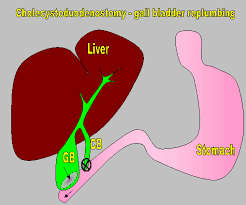
There are, of course, many more where that came from.
I would also like to add, what is not fun is not having a good way to shorten "apocrine gland adenocarcinoma of anal sac origin" and having to write that every time a professor talks about. (Note: I recently learned I could use AGASACA and it made my entire week)
Cholecystoduodenostomy
Hypergammaglobulinaemia
Oesophagogastroduodenoscopy
Parasympathomimetic
Pseudohyperparathyroidism
There are, of course, many more where that came from.
I would also like to add, what is not fun is not having a good way to shorten "apocrine gland adenocarcinoma of anal sac origin" and having to write that every time a professor talks about. (Note: I recently learned I could use AGASACA and it made my entire week)
Tuesday, 18 June 2013
Retrospection on Fledgling Doctor Me
In second year, we had a class called Mechanisms of Disease.
I have only just now, after reviewing this post, noticed I actually made a post on that class before. I just forgot to delete it from my notes so I wrote another one, but what I talked about there was totally different anyway.
It was explained as a way of getting our feet wet with clinical thinking. Even though we had no knowledge of diseases, pathology, or treatment, we were given weekly cases, a lab relevant to the case, and sort of guided through it. It didn't work super well, because every case was presented by a different clinician--some were really helpful, others had completely forgotten what it is like to know absolutely nothing about medicine.
We were divided up into groups, and every group was assigned one case. You didn't have any knowledge of what it would be about until the week of, and then you put together a presentation on the diagnosis for the Friday. They were big groups so this totally sucked. Some people had ten thousand words on their slides, some people repeated what other people said, the formatting was completely crazy on the powerpoints, and there was no coherence to what anyone was trying to say. Then of course when it is your turn, it is absolutely impossible to get 10-ish people to do their research and pool it together into a reasonable form by the end of the week. In our case, the professor in charge of us did a really unhelpful intro lecture, and to guide us in our presentation he told each person to pick what most interested us about the topic and talk about that. That is a good idea, but it results in a less-than-comprehensive discussion of the disease or diagnostic process, and a lot of inane details. Overall, I think the student presentations deserved an A for effort but were useless for learning.
In retrospect, we learned way more in that class than I thought we did at the time, and it was mostly because of the labs. That class was basically mini-medicine class. For instance, that class was the first time we ever read an ECG or looked at a urine dipstick. Now, in fourth year, our level of learning is that we would be expected to diagnose and work up the same sort of cases all by ourselves from start to finish--so it's interesting to think back and compare my mindset. We were so clueless back then!
I remember the first case reasonably well. It was a dog with hair loss, pot belly, and drinking and urinating excessively. The professor asked us what disease this was most likely to be and I had no clue. There was the one person who timidly asked, "Cushing's?" and the rest of us are wondering what Cushing's even is. If someone asked our class that now, it would be too easy. It's like the free points question.
More importantly, back then we especially had no clue on what to do to figure anything out. So I didn't know the specific disease name, but I also got stuck there. What do you even do? I guess bloods--doctors always take bloods for stuff. For the longest time, "bloods" was such a vague, I-know-we-should-do-this-but-not-why answer (then... enter the mysterious world of clin path).
Throughout third year, we had a class called Clinical Studies, and it was the next step up. We didn't have cases or anything like that, but it was essentially almost-medicine class. That's where we started learning things like how to do a physical exam. They hammered in clinical thinking techniques. Along with pathology, we were getting an idea of what diseases are out there, but I'd say we were still completely useless at medicine in general. What is the first thing you do? Take a history! Perfect. Problem is, there's no "Take A History" button, you have to actually think of the questions that you want answers to. Similar to "take bloods", the "take a history" response is more of a reflex than anything else.
Now we kind of sort of know medicine. The process to get from there to here was something like putting thousands of pages into a blender, opening up your brain, and pouring it in. It is coming out of our ears and we have a lot more to go!
I have only just now, after reviewing this post, noticed I actually made a post on that class before. I just forgot to delete it from my notes so I wrote another one, but what I talked about there was totally different anyway.
It was explained as a way of getting our feet wet with clinical thinking. Even though we had no knowledge of diseases, pathology, or treatment, we were given weekly cases, a lab relevant to the case, and sort of guided through it. It didn't work super well, because every case was presented by a different clinician--some were really helpful, others had completely forgotten what it is like to know absolutely nothing about medicine.
We were divided up into groups, and every group was assigned one case. You didn't have any knowledge of what it would be about until the week of, and then you put together a presentation on the diagnosis for the Friday. They were big groups so this totally sucked. Some people had ten thousand words on their slides, some people repeated what other people said, the formatting was completely crazy on the powerpoints, and there was no coherence to what anyone was trying to say. Then of course when it is your turn, it is absolutely impossible to get 10-ish people to do their research and pool it together into a reasonable form by the end of the week. In our case, the professor in charge of us did a really unhelpful intro lecture, and to guide us in our presentation he told each person to pick what most interested us about the topic and talk about that. That is a good idea, but it results in a less-than-comprehensive discussion of the disease or diagnostic process, and a lot of inane details. Overall, I think the student presentations deserved an A for effort but were useless for learning.
In retrospect, we learned way more in that class than I thought we did at the time, and it was mostly because of the labs. That class was basically mini-medicine class. For instance, that class was the first time we ever read an ECG or looked at a urine dipstick. Now, in fourth year, our level of learning is that we would be expected to diagnose and work up the same sort of cases all by ourselves from start to finish--so it's interesting to think back and compare my mindset. We were so clueless back then!
I remember the first case reasonably well. It was a dog with hair loss, pot belly, and drinking and urinating excessively. The professor asked us what disease this was most likely to be and I had no clue. There was the one person who timidly asked, "Cushing's?" and the rest of us are wondering what Cushing's even is. If someone asked our class that now, it would be too easy. It's like the free points question.
More importantly, back then we especially had no clue on what to do to figure anything out. So I didn't know the specific disease name, but I also got stuck there. What do you even do? I guess bloods--doctors always take bloods for stuff. For the longest time, "bloods" was such a vague, I-know-we-should-do-this-but-not-why answer (then... enter the mysterious world of clin path).
Throughout third year, we had a class called Clinical Studies, and it was the next step up. We didn't have cases or anything like that, but it was essentially almost-medicine class. That's where we started learning things like how to do a physical exam. They hammered in clinical thinking techniques. Along with pathology, we were getting an idea of what diseases are out there, but I'd say we were still completely useless at medicine in general. What is the first thing you do? Take a history! Perfect. Problem is, there's no "Take A History" button, you have to actually think of the questions that you want answers to. Similar to "take bloods", the "take a history" response is more of a reflex than anything else.
Now we kind of sort of know medicine. The process to get from there to here was something like putting thousands of pages into a blender, opening up your brain, and pouring it in. It is coming out of our ears and we have a lot more to go!
Friday, 14 June 2013
What Cell Would You Be?
In clin path, when we were learning about eosinophils, our professor mentioned that the pathologists had once had a discussion about what cell you would be, or what cell describes your personality. (Because pathologists are the biggest nerds out of all of us)
She brought it up because she really loves horse eosinophils. They look sort of like raspberries.

There are a lot of cells I like, and some that I'm more partial to than others. My friend and I once talked about this in parasites--there were certain ones that spoke to us so we never got them wrong if they came up on a test. One of mine was Ancylostoma caninum, a hookworm in dogs.
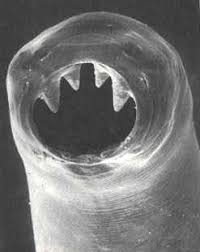


She brought it up because she really loves horse eosinophils. They look sort of like raspberries.

There are a lot of cells I like, and some that I'm more partial to than others. My friend and I once talked about this in parasites--there were certain ones that spoke to us so we never got them wrong if they came up on a test. One of mine was Ancylostoma caninum, a hookworm in dogs.
Another was Toxocara canis because it is the same sort of worm as Dune sandworms.

But back to the topic, there are some nice cells to choose from. I quite like neutrophils because they stand out so clean and nicely on a blood smear.

They can be a little ragged, however. My favourite is one that is much more pristine--very smooth and fine: the spherocyte. Even the name has a nice roundness!
These are cells formed by partial phagocytosis--a macrophage takes a chomp out of a red blood cell, so the RBC stretches its membrane over the defect and gets smaller and more compact. They're present in immune-mediated haemolytic anaemia.
An Update From Study-Land
So as it turns out, vet school is hard. Vet school is really, really hard.
I pretty much spend the entire day in lectures, then come home and spend whatever time is left trying to catch up in textbook readings. It is finals week right now, and I literally spent more than 12 hours straight yesterday preparing for the small animal and surgery exam we had this morning. So you can see why I very quickly stopped updating the blog.
1. No time to write anything
2. No energy left
3. Not much to say! "Today, I studied."
Fortunately I did make notes on things even back in second year that I never got around to typing up. There are a few drafts I left behind, and I'll probably be sneaky and change the date on those when I finish them so I can pretend I posted them back then :P You won't get my naive outlook on it all, since it will be retrospective, but hopefully I can remember some good stories!
A big reason I wanted to keep blogging is that I want to keep some sort of diary of silly clients and bizarre cases. I thought, "Maybe I can blog them or something... oh wait, I already have a blog." So here's hoping for the future!
I pretty much spend the entire day in lectures, then come home and spend whatever time is left trying to catch up in textbook readings. It is finals week right now, and I literally spent more than 12 hours straight yesterday preparing for the small animal and surgery exam we had this morning. So you can see why I very quickly stopped updating the blog.
1. No time to write anything
2. No energy left
3. Not much to say! "Today, I studied."
Fortunately I did make notes on things even back in second year that I never got around to typing up. There are a few drafts I left behind, and I'll probably be sneaky and change the date on those when I finish them so I can pretend I posted them back then :P You won't get my naive outlook on it all, since it will be retrospective, but hopefully I can remember some good stories!
A big reason I wanted to keep blogging is that I want to keep some sort of diary of silly clients and bizarre cases. I thought, "Maybe I can blog them or something... oh wait, I already have a blog." So here's hoping for the future!
Thursday, 3 January 2013
What, you aren't a qualified surgeon?
In third year, we had a class called Clinical Studies, which was a hodgepodge of stuff that's important as a real-world vet, like how to do clinical exams, anaesthesia, and imaging. A large section of the course was dedicated to "introductory" surgery, like the basic principles of tissue handling. That was the aim, but the surgeons live in their own little surgery universe, and in order to pass the exam, you basically had to be a surgeon already.
Our class had to come together in a collaborative effort to answer the questions from past exams, even with all of our books and notes at hand. We made a massive google document full of every colour imaginable, with highlighted answers and multi-coloured discussions and arguments about which one was correct. Lots of spots have something in red or caps, asking "Can someone explain this??" Here's the top of the page when you open it:
Here are a few examples of our attempts to answer the questions in the study guide (SG):
But it gets worse.
The questions are ridiculously pedantic. Look at these. Seriously, the fuck?? WHY WOULD ANYONE KNOW THIS? Let alone in introductory surgery in third year, when you've barely even begun learning anything past anatomy, genetics, and microbiology.
Plus there's the questions like this one, about fistulas. We never talked about fistulas. Not once. I had no idea what a fistula was before I saw this question, let alone had any clue how to answer something about surgical management of one. Plus you'll notice this question goes from cow teats to foaling injuries. You may be beginning to see why vet school is so stressful.
Our whole document was 28 pages long. It was full of misery and stress and colour. Here's the best part, however:
Five minutes before the exam was about to start, as we were sitting at our computers ready to open the program, one of the high-up vet school coordinators appears. He only tends to appear to yell at us, so I immediately knew something was wrong.
It turns out that the surgeon had put the test online ahead of time over the weekend, because he was going to a concert or something. A few people in the class noticed it and accessed it. For some reason, the school decided to wait until that moment in time to let us know about the security breach and change the test. They had to throw out the multiple-choice test and throw something together for us. We would meet in a lecture room in half an hour, and would be taking a written test instead.
People cried.
Our class had to come together in a collaborative effort to answer the questions from past exams, even with all of our books and notes at hand. We made a massive google document full of every colour imaginable, with highlighted answers and multi-coloured discussions and arguments about which one was correct. Lots of spots have something in red or caps, asking "Can someone explain this??" Here's the top of the page when you open it:
I would just like to say good work everyone on all the question answering I think we can all say these questions are worded terribly and information is very inconsistent but GOOD LUCK FOR TOMORROW :) This will not be a very pleasant experience ...i resent this test and the people that prepared it
Here are a few examples of our attempts to answer the questions in the study guide (SG):
18. C because it SHOULDN’T be designed to enhance traffic flow through clean areas? (agreed) (p70 of SG confirms this)
19. A apparently can someone explain this? :)Disinfectants are used to sanitize surfaces / Antiseptics are used to cleanse wounds / Autoclaves are used to sterilize instruments. Hope this helps20. B
21. C (Isn’t this B...? The image is the same as the one in the lec slides) Yep pretty sure its B
22. C
23. C
24. G/D (lettering is not ideal on this question!) not sure bout this either, thoughts peeps. I agree theres a table on page 1062 of fossum that says it is.FROM FOSSUM - Allogeneic cancellous bone grafts provide limited mechanical support and are osteoconductive, but not osteoinductive because the matrix is mineralized. Therefore, answer is NOT G/D. where is this? because according to the table cancellous allografts are osteoinductive..Thus is the answer E???????? I thought none of the grafts were good at osteogenesis. If the graft was rendered inert it would have no more protein therefore cannot be osteogenic unless a protein source was addedyeah i think its E (the last option...E2).. the questions is asking for which one is true..
But it gets worse.
j) An advancement flap in the shape of a U is created, in order to not compromise its vascularity, the ratio of the length to the width should not be greater than:i) 1to1. ??ii) 1.5 to 1.iii) 2to1. ??iv) 3to1.v) 4to1
ok so been trying to find this one... and found a few recent articles/studies saying that ratio isn’t even a factor …. “Therefore, the traditional concept of a width-to-length ratio does not dictate flap survival, rather perfusion pressure does.”anyways it carries on to say “ Classically, advancement flaps have a length-to-width ratio of 1:1 or 2:1” WHICH STILL DOESN’T HELP US!
The questions are ridiculously pedantic. Look at these. Seriously, the fuck?? WHY WOULD ANYONE KNOW THIS? Let alone in introductory surgery in third year, when you've barely even begun learning anything past anatomy, genetics, and microbiology.
When using Chlorhexidine solution (stock strength = 4%) to lavage a wound what is the maximum concentration that should be used?(a) 1 part in 10 of saline.(b) 1 part in 20 of saline. p.27 has lavage concentration should be .05 = 1/20)??(c) 1 part in 30 of saline(d) 1 part in 40 of saline. Fossum says 1:40(e) 1 part in 50 of saline. ← I thought it was 1ml to 80ml but....you want to get Chlorhexidine down to 0.05% soln thus need to dilute it down 20 timese.g. 10ml chlorhexidine diluted by 200ml saline = 0.05%10/200 = 0.05% actually idk (I agree with B since that’s what the SG says.. eg 1/20=0.05)
You have to remember you are starting with a 4% solution...... So, you can’t just do 1/20..... Besides 1/20 gives 5% not 0.05%
there was a something on the internet that had it as 1 part in 40 but I can’t find the link anymore..some textbook on google books...ughhh me gad!
2. The maximum level of bacterial contamination required for successful wound closure in surgical wounds is generally considered to be:a. 104 / g of tissueb. 105 / g of tissuec. 107 / g of tissued. 109 / g of tissue
Plus there's the questions like this one, about fistulas. We never talked about fistulas. Not once. I had no idea what a fistula was before I saw this question, let alone had any clue how to answer something about surgical management of one. Plus you'll notice this question goes from cow teats to foaling injuries. You may be beginning to see why vet school is so stressful.
18. Which of the following is a correct statement about a fistula?(a) When closing a teat fistula in a cow the most important layer to make leakproof is the mucosa.(b) When closing a teat fistula in a cow the most important layer to make leakproof is the skin.(c) When closing a teat fistula in a cow preserving the epithelial tract willaccelerate healing. ← maybe this one but i really have no idea(d) When repairing a foaling injury that has resulted in a rectovaginal fistula ina mare a complete closure of the vaginal mucosa is more important thanthe rectal mucosa. i know rectovaginal tears are not usually closed right away to allow for swelling to go down, but I think the vaginal mucosa is the most important thing to worry about (to reduce further infection from the rectum)...(e) In time most fistulas will close as wound contraction is completed.
Our whole document was 28 pages long. It was full of misery and stress and colour. Here's the best part, however:
Five minutes before the exam was about to start, as we were sitting at our computers ready to open the program, one of the high-up vet school coordinators appears. He only tends to appear to yell at us, so I immediately knew something was wrong.
It turns out that the surgeon had put the test online ahead of time over the weekend, because he was going to a concert or something. A few people in the class noticed it and accessed it. For some reason, the school decided to wait until that moment in time to let us know about the security breach and change the test. They had to throw out the multiple-choice test and throw something together for us. We would meet in a lecture room in half an hour, and would be taking a written test instead.
People cried.
Subscribe to:
Posts (Atom)