Showing posts with label Adventures. Show all posts

Wednesday, 30 December 2015

ExoticsCon


When I was reading on VIN what people recommend for getting started in avian practice, the biggest answer was "Get yourself to the annual avian conference." So I did. And it was awesome.

ExoticsCon was in San Antonio this year, and it was a combination of the avian vet association, the reptile vet association, and the small mammal vet association. There were lectures for all three going on at once, so I could go to a half hour about avian viruses, then switch to a case study of cancer in a hamster, then check out research on reptilian pain perception, if I wanted. I was worried the experience would be too similar to school--flashbacks to 8 hour days of lecture--but it was SO much more fun. All the pressure of exams and assignments was gone, and I could pick what I wanted to learn and when. If I didnt want to go to anything for an hour, I didn't have to. But I had the opposite problem: I was usually choosing between two or even three simultaneous lectures that I wanted to see. And there were some big names there. I went to talks by people like Brian Speer and Thomas Tully--guys who wrote the textbooks on avian medicine.

My hotel. I was very important, being a 
doctor and all. 

I made some friends, too. Everyone was so easy to talk to, happy to give advice and interested to meet a new grad. I had my "first time attendee" badge and that made for a good icebreaker topic. Even before that, five minutes off the plane and standing in line for a taxi, I met a vet student on her way to the same place and we shared the cab. She was even going to intern at Wildbase in a few months--small world!


Being in San Antonio was something else, too. For a small town girl, it was like complete sensory overload. There was more stuff within a thousand feet of my hotel than there is in like my entire home town. I mean, there was an IMAX attached to my hotel, for crying out loud. There was also a spy exhibit, with lots of history about intelligence operatives, neat artifacts (like an enigma machine), and simulations of stuff like a laser maze or a room with a bunch of hidden cameras. If I wasn't so busy with the conference, I could have spent hours sightseeing or shopping (apart from the slight detail that Texas in August is like the surface of the sun, and I couldn't go outside for two seconds without melting). I simply had to take the boat tour down the river, which was amazingly gorgeous, but my poor old camera wasn't up to the challenge so I couldn't get a lot of worthwhile pictures.


Pigeon carrying spy cameras.
 
 Laser maze! I failed horribly.

A neat thing about the conference was how... sciencey everything was. There was a giant room set up with booths for vendors, including lots of free stuff (candy, free samples, stuffed animals), and tons of handouts. When trying to sell to vets, I guess, the thing to do is print out journal articles that support your product, and talk about all the studies and science that prove why I should by it. I also go try to some fun demos, like cutting a piece of meat with a radio-scalpel.

My favourite part was the keynote speaker, who is avet for NASA and has been in space a whole bunch of times. He had videos and photos of him actually in space and on the ISS. Most of his talk was about the physiological side effects of space travel, and the history of animals and space travel. Normally, my love of sci-fi is a completely separate part of my life to the work part, so this totally blew my mind. Completely starstruck. And it turns out, in a room full of hundreds of vets, there's really quite a high percent of sci-fi nerds!


The other exciting thing that happened was zoo day at the San Antonio zoo. Because in my profession, a professional conference can include zoo day.

 Left: Reptile house. Right: Feed prep area.
 

Sunday, 6 December 2015

The Nightmare That Was Boards

After the harrowing experience that was final finals, I had the pleasure of sitting the licensing exam. NAVLE, it's called: the North American Veterinary Licensing Exam. As if three weeks of written and oral exams weren't enough, I had to study for another two weeks, make the six hour drive to Auckland, and then take the most difficult and frustrating test of my life. Unfortunately, the reason it was so awful had a lot more to do with the climate control than the material.

I took the test in December, which means hot, humid, muggy weather in Auckland. We stayed in a cheapish-but-central hotel, in a room the size of a closet, with no fan, no air conditioning, and no internet. The only thing to do in that room was lay on the bed with all the windows open and try not to stick to everything, because outside was just as muggy and breeze-less as inside. There was a tiny tv with six channels, and then me with my stack of notes that I'd read over a hundred times in the past month.

Okay, so miserable hotel, whatever. I've traveled, I can deal. But what really got me was the testing centre. I'm surprised I made it out alive.

The instructions were to show up half an hour early, so we could get all registered and set up. The elevators were weird and broken, so I had to go to the floor below and take the stairs up, then wander around to find a registry desk--which was dark and empty. One by one several of my classmates arrived, and we all stood around awkwardly, waiting for someone to show up. There was a dark, empty, locked room labeled as the testing centre, and literally no other soul in sight. The half hour elapsed, and then another.

Eventually someone did show up, and then we were taken into another room, sat down, and told to wait some more. One by one, we were called up to give ID, get scanned for cell phones or devices, and handed official scratch paper for notes. The actual testing chamber was a row of eight computers divided into cubicles, each with a set of ancient, uncomfortable, noise-blocking headphones. And no climate control.

In the crisp wee hours of the morning, all went well. I worked my way through the old-fashioned UI and got to test-taking. It's a multiple choice exam with six modules of 60 or so questions. They are timed so you have an hour for each module, but no specific timing on individual questions. There were a whole lot of details to this process, but it's all a blur in my memory--which is wont to happen when you take a seven hour exam in a room like an oven. I realise my math doesn't add up right... I think the extra time comes from the hour or so of allotted break time. You can take your breaks whenever and however you want, between modules. So like, if you start a module, you're stuck until you finish it, but if you want a 10 minute break after each one, you can, or you can power through half and take a long lunch, etc etc.

As time wore on, with eight people in this cramped, sound-proofed room (read: oven), my physical and mental state deteriorated. Even though I took as many breaks as I could, as soon as I got back in the room, I started getting lightheaded and having a hard time concentrating. I was so sure I would faint. I had to start taking breaks specifically to go to the bathroom and lay wet toilet paper over my forehead and neck. Oh yeah, the bathrooms were on another level, had a security code on them, and no paper towels. And the cold water was lukewarm.

The material on the test was irritating, too. I knew going into it that there would be a certain percent of questions where I had no clue, had never heard of the disease/diagnostic test before, and would have to guess at random. I didn't expect all the other annoying questions. For instance, at least 50% of the small animal questions were on cat respiratory disease. There was supposed to be a large section of pig questions, and only a rare deer question, but instead, there were no pig questions and lots of deer questions (guess what I studied). And the most annoying of all were the questions that asked what step would you take next, and then list 5 tests or procedures that are absolutely appropriate for that clinical situation, and I had to try and hazard which really-important-helpful-thing they wanted me to do arbitrarily first.

I was the first one out of there. I've always been a fast test-taker, but after a point I was just like, "I need to get out of here before I pass out." I believe I started at 9am and finished at 3:30pm, so 6.5 hours total. On my evaluation form, I wrote angry comments about the climate control. My husband traveled with me, and I found out he, too, had laid around dying of heat and humidity, with the original intention of exploring the city.

We went out to eat at the rotating restaurant on top of Auckland's Sky Tower, and he'd put the reservation under my name as "Dr" and we had wine and lamb and dessert. Then we went to the ice bar and stayed there a good long while.


Friday, 4 December 2015

To All The Unsung Blog Posts - Part 2

More not-quite-stories from final year!

- Imaging roster was known as "radi-holiday" and "radiation vacation." It was supposed to be a total laid-back easy peasy week. Totally not the case. The surgeon most notorious out of all surgeons for making students cry and break had recently decided to forget about surgery and do a radiology residency. Also, there was nothing more boring in all of final year than standing around for three hours in a dark room with 5 other students, no sitting room, watching the two residents painstakingly repeat and record every step of an abdominal ultrasound that should have taken twenty minutes.

- During equine rotation, some of our days were very slow, and one of the vets had a horse competing in a race, so the residents actually took us on an outing to a day at the races. We went out in one of the university's minivans, bought fried food, watched them show the horses, cheered for ours, talked about polo, and huddled together from the cold, miserable, windy weather.

- I planned to use for a blog post title: "And Today's Wardrobe Options Are Scrubs or Scrubs."

- I can't remember specifically what the issue was, but I believe it was regarding the horrible hours and work conditions in the small animal hospital. I have a paragraph from a started-and-abandoned blog post that goes: "I of course being the confrontational go-getter that I am, made sure something got done about it by writing a mildly worded email to our class rep... after her prompting me to do so."

-  My very last day of surgery rotation ever, a Friday, saw a dog come in at 3:30pm that had been hit by a car. I did the initial exam, and then stayed with the dog as he was stabilised and transferred to anaesthesia. Surgery started at 7pm. I got home and had dinner at 10:30pm.

- One of my last rosters was the SPCA. Most people had this earlier in the year, which would have been much more valuable, because you cover some surgery basics and get to try a few speys and neuters. During my week, they were doing a "desexathon." Free or low-cost (can't remember) desexing for pet cats in the area, to help control stray populations. Which is very worthwhile, because at least half of them were pregnant, and with 30-50 speys in a day, that's a lot of unwanted kittens. The sucky part is that because these were owned pets, the shelter wouldn't let us do anything. So I spent the entire week standing in a corner watching them do speys. Bear in mind this is a month before I qualified as a vet.

Thursday, 3 December 2015

To All The Unsung Blog Posts - Part 1

I had many interesting ideas for posts that never got written. Here's a slew of the most interesting snippets that never made it to the light.

---

- At a small animal clinic, during one exam there was this very cute little kid who was really into learning about everything that was going on. The vet had a kiddie stethoscope to give him, and he spent the rest of the exam listening to everything--the dog, his parents, himself, the table. The first time he put it on, he put it in his ears backwards, and after being corrected, was very concerned about getting it right every time after that. He kept interrupting to ask "Is it on right?" before listening to another inanimate object.

- One of my classmates fostered a paralysed dachshund that came through the hospital. The dog had a little mini wheelchair, and hung out with us in the student lounge. She was very friendly and would wheel around and get stuck on things.

- While on emergency rotation, a dog came in critically ill. I spent several hours with the team, participating in a small part of monitoring while they performed lots of dramatic procedures. At one point, I got sent to run down the hall to the lab, to see if we had results back on clotting times. They weren't back, and in the 5 minutes I was gone, the dog died.

- We toured a deer farm and a pig farm, which were really cool, but don't make for interesting stories. Though one of the techniques at the pig farm to tell if the feed mixer is doing a good job, is to drop in a bunch of sprinkles and look at their distribution in the final product.

- To prepare us for dealing with clients, we had to break into groups with an actor assigned to each group. We had several scenarios, and had to practice things like delivering bad news or dealing with an angry client. Some of the actors were apparently quite difficult! All of this was recorded so we could study it later. My group was a bunch of pansies and nobody would volunteer, so I ended up going twice.

- On our public health roster, we took tours of several meatworks--beef, lamb, and poultry facilities. While much of my class hated this, I actually found it fascinating. Everything was so clean and orderly. Plus we got to walk through the chiller, where the stripped carcasses hang on slow conveyor belts like we were in a horror movie.

- I'm not sure I ever talked about our naked calendar, one of the fundraisers for Halfway Day. I'm not sure what I did with the photos from my group, but you can check out the current Barely There calendar website for general photos, and maybe even support the current third years! Updated every year by the new class.

Thursday, 20 November 2014

I Finished Vet School Today

At 3:30pm, I walked out of my final exam of vet school, and left the small animal hospital for the last time (because I handed in my access card immediately afterwards)!

Here's what I said on facebook:
 THAT'S IT LAST EXAM VET SCHOOL DONE.

Vet school has become such a state of being it's hard to imagine actually being finished. No more lectures, treatments, missing lunch and dinner at the small animal hospital, falling asleep in rounds, running back and forth between radiology/surgery/ICU, getting cold and wet in a paddock, trying to make sense of the insides of a cow, pretending to know something about horses, hesitantly checking ESS feedback, endless hours at the large animal teaching unit, dressing up for all the costume parties, writing presentations practically every week, ten thousand assignments, walking 3-legged dogs in circles, yelling at Cornerstone while trying to do paperwork, struggling to get red book signatures, cluelessly palpating muddy sheep, oral exams, and a hundred other things.

I can actually sleep and have meals and hobbies for a change. No more sitting around studying every night, or feeling guilty about not studying every night (for a few days at least...) Phew, I can't believe it's actually over!
Now that I have time, I promise to update the blog and fill you in on exams and rosters and everything exciting that's been happening. I may sneakily add posts into the "past" so they fit chronologically. I have so many notes and experiences to catalogue!

It's been a full MONTH of studying for me, and it's not over yet. I still have to hardcore study for the next two weeks, then drive to Auckland for the seven hour computer based North American Licensing Exam. But then at long last I can breathe a sigh of relief, visit the South Island, and fly home and see my dogs and family!

And, let's not forget the most important part:

After five years, I am now a veterinarian.

Saturday, 12 July 2014

Overseas Adventures

You might have noticed a lack of posts in May and June, and attributed it to the fact that I tend not to post for large periods of time. That actually wasn't the case, and in my defense, I never forget to post, I just get too busy or too tired. This time, I was overseas doing some externships at clinics in the northeastern US.

The first clinic I was at is a small animal general practice, so you'd think it would be pretty similar to my other weeks at local small animal practices. It wasn't.

I don't know how common this is in the states since I haven't been to as many practices there, but this place was doing high-end medicine. They don't just have digital xrays and ultrasound, they have chemotherapy, phsyical therapy (including a water treadmill), nutrition specialists, behaviour experts, endoscopy, and more. They do complex surgeries, not quite up to the level of a referral surgery service, but do perform many procedures that other practices would refer. The vets there are all extremely knowledgable. The practice also places a lot of emphasis on client communication and building client relationships, so they had lots of tips to share with me in the "soft skills" department as well. They even called up the Humane Society and had them send over a bunch of speys and neuters for me and my classmate! Our university doesn't even do that.

The other clinic I visited was a specialist clinic. They had multiple internal medicine specialists and boarded surgeons, as well as a regular oncologist, cardiologist, and a few other bits and bobs. That was a step away from the world of general practice, and delving into "What life is like as a specialist." I decided I probably don't want to be a specialist, but they do see some seriously cool stuff. The most memorable was a pair of 20-something-year-old Capuchin monkies that are trained to help blind people (and they do a LOT of neat things for them). It was interesting seeing the different personality types in the different specialties, and to go more in depth in the cases.

It's hard to form a post for a six week period. I did so many things its hard to remember them all, let alone pick some to write about. It was a mix of busy days and sightseeing. I reinforced a ton of my pharmacology and medicine, and got to do quite a few routine surgeries. One thing I noticed (I'm not sure if this is a regional difference, or just luck of the draw with cases), was the large number of pets on the same anti-anxiety meds as people, like Prozac and Xanax. There are different diseases and disease prevalences there, which was an interesting challenge. New Zealand doesn't have rabies, heartworms, ticks, or tick-borne diseases, which are all important in the US and part of standard medicine (eg annual vaccinations and testing). Also, the drugs they have are different, which is tough to remember sometimes.

The best thing about getting away and doing some externships was regaining joy and enthusiasm for veterinary medicine. Hospitals are run very differently to private practices, especially university hospitals. At school, we students are used as free labour for a lot of menial tasks that take away from our time and energy to focus on the medicine itself, things like doing redundant paperwork for the computer system or nursing care for all of our patients (which would be fine if I were at vet nursing school). The clinicians are so used to students, we're just "another one" to them, and they probably get tired of the same mistakes over and over. We have skills books that they need to sign, and we have to chase them down the halls on Friday afternoons before they'll finally, grudgingly give up a signature.

At a private clinic that doesn't see many students, they cared a lot more about my individual learning. They had the approach of, "What can we get you to do? What skills do you need signed off? Let's see if we can organise something for you." My spare time consisted of reading and discussing cases, instead of picking up poop and ice-packing surgical wounds. The biggest difference was that the vets treated me and my classmate like colleagues, rather than students. They asked our opinions on things and never talked down to us. It was a positive, collaborative atmosphere, and the things I did were a lot closer to "real" veterinary medicine than my rosters at uni. It was a great boost halfway through the year, because I'd been beginning to doubt my interest or commitment to the profession. Now I believe that's simply due to the warped perspective we get from spending all our time in a teaching hospital.

I feel like I'm not giving my trip decent justice, boiling down six weeks into those two paragraphs! I suppose most of the interesting stuff was case-related, which would involve getting more technical than the blog is intended to be, so I'll leave it at that.

Thursday, 10 April 2014

I Got to Go Out With the Coast Guard

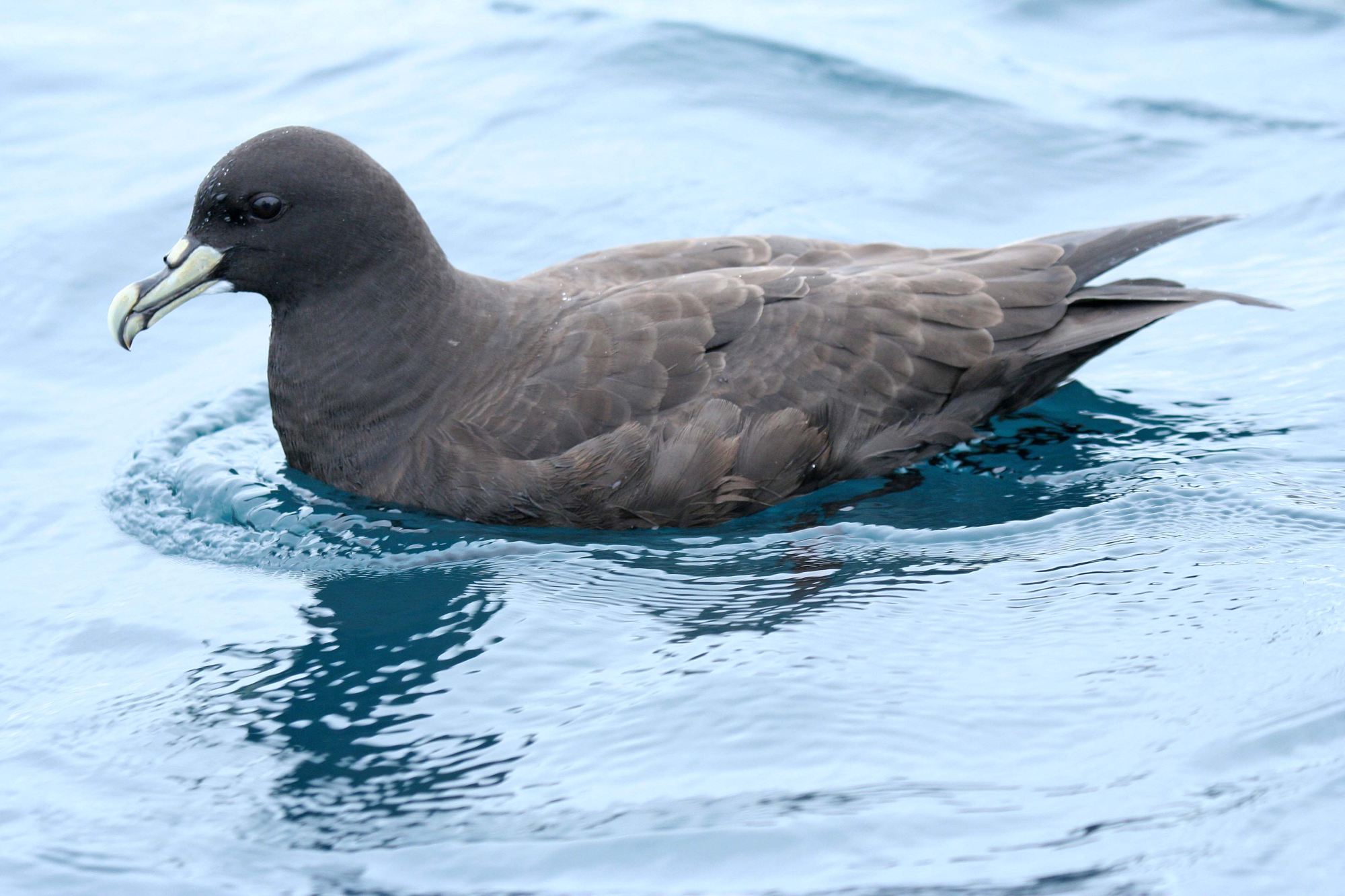
Wildbase had a giant petrel in hospital for a few days, and with those giant seabirds it's quite important to get them back into the wild asap. More than a few days in hospital can end up causing a downhill turn. In this case the patient had been found on a beach, which means it must have been pretty sick, but as tends to happen in these cases, a particular cause wasn't identified. It was nursed and given lots to eat, and a big factor is restoring the waterproofing of their feathers.

After a few days, it was time for him to go home, which meant a trip out to the coast!

A forty minute drive to the coast later, with the petrel in a dog cage in the back, covered by a towel, we met the two guys at the little dock with their little boat. We climbed on in, and it was suggested to me that I not sit in the back, because I might "get a little wet." Instead, we stood in the cabin area, where there were back supports instead of seats. These made sense once we got going: after clearing the small bay, we took off.

http://www.coastguard.co.nz/uploads/images/Vessels/WaihekeVessel.jpg

It was super windy that day, and along with it came massive waves. And I mean several meters high. We'd go up one, fly off the crest into the air, freefall, and slam back down onto the water. Then up the next one, into the air, and down again. Fssssh-woooosh-POW. That's my impression of it.

Though somewhat terrifying, that part was pretty fun and not particularly nauseating. The difficult part was when we got far enough out (several kilometers, I forget the exact number), and came to a stop. The wildbase person I was with brought the bird out of his cage and put him over the side. Freedom! We waited to see what he did--would he paddle and drink and flap his wings like a normal bird? The answer was yes, he looked very happy and healthy! He quickly drifted away from us, exhibiting all the normal behaviours, and we watched him for a long time.


This turned out to be less fun than expected, because those waves were still massively high, and instead of rocketing over them, we were just sitting there, waving steeply back and forth. The wildbase lady described it later as, "I was telling myself, 'just focus on the bird, focus on the bird,' trying not to puke." Getting back to solid ground was quite a relief.

Monday, 24 February 2014

Still Not Going To Be An Equine Vet

I have to do an equine externship at a local practice, because apparently you can't avoid horses even when you track I-hate-horses. Er, I mean smallies.

Pros:
- Got given ice cream
- The vet has a new puppy, so I spent most of the day with said puppy in my lap or arms.
- Horses are gorgeous. Very pleasant to look at.
- Outside on nice days

Cons:
- Driving the whole damn day
- Unpack all your equipment, do your thing for 20 minutes, repack everything. Drive to next farm, unpack everything again, start over
- Outside on crappy days, too.
- Chain smoking client, impossible to avoid smoke cloud

Okay there are actually a zillion more reasons involving the medicine itself, the clients and client interaction, and the work/lifestyle on why I don't want to be an equine vet, and a lot of them overlap with why I decided not to do any production medicine, either. I could write a whole essay on it. In fact, I have, because we had to write an essay about why we wanted the track we chose (there are limited spots for each track). Maybe it will be the subject of a future blog post.

Wednesday, 31 July 2013

Stories From First Year: Aviary

This one didn't actually happen in first year, I think it was all the way after second year, but I didn't want to mess up my nice title series! Theoretically I could have done it in first year...

For my three weeks of "other" practical work, I picked birds! I worked at the aviary in the Esplanade that summer, which has dozens of species kept in all kinds of enclosures. Two of the enclosures house native New Zealand ducks that they're breeding as part of a conservation program. There's everything from the little songbirds and parrots, to pheasants and peacocks.

My favourite was a sulfur-crested cockatoo that suffered an old gunshot injury, so now climbs and walks around rather than flying. He knows how to speak and would say "hello" to me, and followed me around the enclosure by climbing along the walls. My least favourite was his neighbours, two more sulfur-crested cockatoos that got upset at my presence and liked to attack. More than once, I heard some flapping only to turn around and find a giant white bird hurtling towards my face.

The bird-keeper was a pleasant old fellow, but boy did he move slowly. He'd pause regularly to chat, whether it was out in the enclosures, or just hanging out at his computer as he showed me about a thousand photos from his trip to Africa. He usually took a full half hour at both morning and afternoon tea breaks, as well as a lengthy lunch. During that time I learned all the rules to darts and also drank more tea than I had in my entire life. Even if I didn't make myself tea, someone else usually brought me one. We spent so much time fluffing around to fill up the day, that one day when he was absent and I had to do all the enclosures myself, I got everything cleaned and fed by lunchtime. I scratched my head for a bit wondering how two people could take twice as long, then went home.

I was surprised by the birds' diets, having not had much experience. Making up their food is kind of fun, because they eat so much human food. Apart from their seeds (different combos for each enclosure), they also got fresh and frozen vegetables including corn, carrots, and peas. They got lettuce and silverbeet, apples, and some of them also got cheese, dried fruits, or honey water. To be honest, it sounded like a pretty delicious picnic some days.

At one point, we de-wormed all the budgies, which involved sticking tubes down their throats on two separate occasions--and there were 70 budgies. This was great handling experience, but I might mention that budgies bite hard.

My absolute favourite part was the Monster. I believe it was actually a Kea or some such bird, but I had to take bird-guy's word for it, because I never saw it. It had a huge enclosure with big bushes and a big house with concrete cylinders and other structures. I'd come in every day and drop off new lettuce, and find the previous day's three-quarters-eaten veggies strewn about. The apples would disappear. The water would decrease. But no bird. Ever. I decided it was actually a creature out of some horror movie, shrouded in mystery--the Kea thing is just a ruse.

Tuesday, 30 July 2013

Stories From First Year: Sheep and Beef

This one was in New Zealand, and again all I did was odds and sods. I put up some electric fences sometimes, but mostly I rode shotgun in the tractor, jumping out to open gates. Fortunately the old farmer I was with was very fun to talked to and loves making friends with international students (he introduced me to some other international students).

He also let me drive the tractor once. I am totally into that. I even parked it perfectly. Little me, up in this massive tractor, roaring down the farm track at like... 10kph. Well maybe it was faster than that. I don't remember. It was an automatic transmission so I didn't have to do much work at all, but it's something to cross off the bucket list.

The other thing I really liked was watching the farm dogs work, because they are so beautiful and well trained.

The most annoying day for me was sorting wool. Good god. It wasn't even shearing time, it was just crutching--taking the wool off around their bums so they don't get covered in poo--so it was way less wool than I would have had to face at shearing time. Still, that was one unpleasant day. From eight in the morning until I left at five in the evening, we were in the wool shed, with an endless stream of sheep, just me and the socially awkward shearer. I had a sort of stick thing that I used to sweep the wool off the platform, which sometimes involved sneaky maneuvers around his feet or behind him. Then, since it had just rained of course, I had to lay out anything super wet to dry, because apparently if you pile up wet wool it explodes. 

My skin is sensitive to wool, so by the end of the day, not only did I have a cramp from wielding my wool-stick, and not only were my hands covered in wool grease, they were also all red and itchy. It was also a bit of an adventure trying to get all the wool into the wool compressor thing. At first it went well, but around lunchtime the bin was pretty full, and there wasn't anywhere else for me to put the wool. So after that point I had to periodically climb up into the bin and jump up and down and stomp around on top of the wool until I made enough room to fit more in. Then of course when I did that, I got behind, because the shearer just kept on going, so the wool on the platform would amass and I'd have to frantically try to sort it out before it built up into some sort of wool ocean.

The worst part was that we didn't quite finish, and I had to come back and do more the next day. Ugh my hands were prickly needly greasy itchy sore globs of death.

Saturday, 27 July 2013

Stories From First Year: Equine

A horse stables was the second of my practical experiences, and similarly involved a lot of new understanding about how horses are kept and what to do around them. It's pretty dull to talk about--I shoveled out stalls, fed the horses, groomed some horses, routine stuff like that. I did get a fair amount of responsibility with the horses, which was very lucky because apparently plenty of my classmates got stuck with some really boring equine time. Some places don't want you touching horses at all if you have no experience, so my friends got to do nothing but shovel stalls for three weeks straight.

One thing that amuses me is that horses require snow shoes so they don't skate around all over the ice, or get it packed up into their hooves. It was slightly terrifying to be leading this massive beast and have it slip on the ice and get a fright. I think I panicked more than the horses. They also got snow jackets, which I had to put on in the morning before they went out, then take off in the evening. The horses were surprisingly docile and pleasant to work with, which isn't my experience with horses in general.

I got to be mini-vet when one of the horses got kicked by another horse, and it became my duty to clean the wound and dress it every day.

The best part was all the other animals. In other stalls they had two ponies, two alpacas, a llama, and a donkey. Roaming free they had a goat, a tiny ugly pig, and a super fat sheep, and also a very handsome dog and a bazillion cats. And a domesticated raccoon that is the fattest raccoon I've ever seen.

The alpacas were skittish, but made adorable little mewling noises. The goat had some serious personality, and constantly sat on things that I needed and chewed on stuff and got into things. The ponies were fun to be around, but I'm not sure why. The llama was the best--I got to lead it out to pasture just like the horses, and it's just... llamas are really hilarious. They look funny and move funny and act funny. I think it got free at one point and the people who worked there had to go chase it back. The raccoon was cute, but had crazy sharp teeth and claws. It constantly chowed down on the cat food, which is how it got so fat, and it would come up and beg around people (which was not fun considering how sharp its claws are when it's grabbing at your leg or your sleeve).

Thursday, 25 July 2013

Stories From First Year: Dairy

Ever since I started this blog, I've had "prac work" on my list of topics to write about. It would have been fun to see my original impressions of everything, but maybe the reason I never got around to it is that I couldn't think of any particularly exciting stories to tell. Now that I've finished all of them, I think I can cobble together an interesting assortment of notes from my experiences. We had to do 16 weeks on various farms during our breaks and summers, and I'll talk about them one at a time.

The first one I did was on a dairy farm in the states. As someone with no large animal experience, I didn't have a clue about working around cows or what a dairy farm was like at all. I remember being quite surprised at how all the cows had electronic collars, and the milking machine registered it and recorded their individual milk production and sent it to the computer, where you could look at it in charts and graphs. I also was impressed by the gigantic automatic pooper-scooper that moves slowly back and forth across the floor.

The most fun was on days when the vet came. I followed him around and talked to him heaps, and he let me help on a few surgeries. It was my first year out of vet school, so it was the first time I was ever treated as a vet student. I remember feeling excited but also super confused at all the vet-lingo he fired at me, as he explained the surgery. At this point I didn't even know cow anatomy, so my thoughts were along the lines of "I don't know what he's talking about but it sounds so professional and cool!"

The other distinct memory I have is following him while he was doing pregnancy scanning, and this one cow followed us the whole time. She kept rubbing up against me and pushing her head into me and sort of knocking me around. Cows are really cute!

Unfortunately, the farm I was on was well run and had everything covered. They didn't need a student to do anything, so apart from the odd job here and there, there really wasn't anything for me to do. The one time I tried to help out in the calf barn, I got myself completely soaked from trying to carry the big water buckets. Most of the work was done by a handful of Guatemalans. I ended up spending most of my time helping out with milking, and the Guatemalans flirted with me and tried to teach me Spanish.

As it turns out, that farm was a barn-based system, and in New Zealand it's largely pastoral farming, so when I got back to school I still was clueless about what we were learning. I spent the next two years trying to sort it all out in my head. Pasture-based farming is really different, but more fascinating I think.

Friday, 21 September 2012

Halfway Day

After years of anticipation and fundraising, halfway day finally arrived. It takes place near the beginning of second semester, third year, and marks the exact halfway point of our degree.

In preparation, the third years host all the annual vet events (Mr. Vet, the Slave Auction, the Naked Calendar, the Vet vs Ag students debate, and numerous bake sales and other small fund raisers). The other classes always support the third years, in return for getting supported when their time comes.

I'm pretty sure what we did is basically what happens every year: bus trip to Taupo, fancy dinner, and three options for activities during the day. Those options are skydiving, river rafting, or chillaxing (groups went to the hot springs, or fishing on the lake). Skydiving was crazy popular, as you'd expect, however on account of the expense, if you wanted to do that you had to pay a bit extra. I decided not to go skydiving, because you get your one jump and you're done. I chose the rafting, and it was amazing.

We got the day off of class (it was a Friday), and got up at the crack of dawn. After the two or three hour bus ride, with half of us asleep and the other half getting a head start on drinking, we were dropped off at the rafting facility. There was a large amount of chaos as we ate our packed lunches, changed into swimsuits, and queued up for our gear. That was kind of fun: we wove through this little area with staff at every station, rapidly sizing us up and stuffing something in our arms. Then there was the awkward squeezing into wetsuits and buckling up the jacket correctly, and redoing it all when you realise you put something on in the wrong order. Or when, ten minutes later, you suddenly have to pee.


Once we were all geared up, and had taken a sufficient assortment of photos of each other, it was time to grab the rafts and get going. The vans took us about ten minutes away to the river, we teamed up, got ourselves into the water, and then we were off.

The river guide said there were fifty rapids. I was expecting a wild ride, splashing around corners and what have you, but in reality it was actually quite relaxing. Well, I guess it was pretty exciting when we got stuck, and had to rock back and forth pretty vigorously to get ourselves un-stuck. And there was also a lot of passing and getting passed by other rafts, which always involved more than a little bit of splashing with paddles. 

But like I was saying, apart from a few speedy turns and the larger rapids, I would mainly describe it as serene. We had an absolutely perfect day, not a cloud in the sky, warm and sunny. The river cut through cliffs covered in ferns, so most of the time we were surrounded in lush greenery. Halfway through, all the rafts stopped, and they served us hot chocolate and marshmallow fish. Quiet, still, bright, green, ah it was beautiful.

Adding to the relaxed feel, our river guide had a very calm, pleasant voice:

"Okay forward paddle team, forward paddle. That's it team. Okay guys back paddle now. Back paddle."

After the last rapid, they stationed a photographer and shouted at us to pose. I'm in the back right, in front of the river guide. 


On top of everything, when they brought us back, they gave us complementary sausages, beer, and a few other munchies. Everyone was showered and relaxed, and overall the whole experience took up most of day, so personally I think it was the best value choice.

The rest of the evening, we hung out at our hostel, watched some of the Olympics, and got ready for our formal dinner. After night fall, we walked down to the lake, where three boats waited for us. Since there are about a hundred of us, and the boats were not really that big, we kind of crammed ourselves in there, but it was still pretty romantic. The line for the teeny tiny bar, however, must have taken up half the boat. Once we were in the middle of the lake, the town of Taupo nothing but lights on the shore, the boats lined up so we could move between them. Depending on what meal we had ordered (I believe the options were beef dish, chicken dish, and vegetarian dish), we found tables on our designated boats, and dined.

I had the vegetarian meal, and it was awesome. Most of the others weren't actually vegetarians (only 2 or 3), but just thought it would be the best meal, and I'm pretty sure they were right. We had lasagna, along with numerous sides, including scalloped potatoes (one of my favourites), and fresh, soft rolls. We were also the smallest boat, with the fewest diners, so it was reasonably quiet and intimate.

After we finished the meals, our class rep and a few others gave speeches, and they awarded silly prizes ("cutest couple" for instance, and recounting embarrassing moments). The rest of the night was music and dancing, standing out on the deck watching the lake, and sitting at the tables chatting. A vet faculty member is always voted to come on halfway day, and ours was really into it, totally dancing with us and joking around with everyone.

Once the boats got back, most people hit the town. Or more correctly, most people hit the hostel to get themselves ready, and then hit the town, which is a slight detail my friend and I did not realise. We followed some classmates to a nice bar, did some dancing, and noticed that there was a surprising lack of vet students around. So we got bored and left, and just hung out back at the hostel with a small number of people.

Overall it was a great experience, and every bit as fun as expected. The only downside is that we've been looking forward to it for so long, and now it's over. We're faced with long years of classes and studying, as many in front of us as behind, but harder than the first half. I guess the next thing to look forward to is... graduation!

Monday, 19 September 2011

In Vet School, We Watch Grass Grow

Our agronomy professor lost favour with me.

He sprung a little field trip on us. The day before two major anatomy exams. He had no interest in rescheduling, was kind of a dick about it actually. He insisted it would be mandatory and that there would be a roll (there wasn't). I suppose it might have been alright if it was a really good trip, but this is what happened:

We got on some grungy old buses, drove out to a little farm, and then stared at grass for four hours. Four. The professor waffled on about the pasture, and got the farmer to waffle on about farming, and we literally walked to a paddock or two and looked at the grass, while they talked about grass. The farmer's dog got the most attention out of all of them.

The professor's credibility got seriously undermined within the first twenty minutes by this gem of an exchange...

Prof: What do the vets do?
Farmer: They are involved with animal health, preventive care, calving problems.
Prof: What about the pasture? Do they help with pasture management?
Farmer: No, I have a farm consultant for that.

Monday, 6 June 2011

Beef Bull Expo

For our genetics class, they took us on a bus trip to see a beef bull expo. The general idea was to look at the genetic values of the bulls and compare it to how much they actually sold for. It was about a half hour ride out of town, though the buses left from some mysterious place on campus that no one had heard of before. The professor neglected to tell us where it was, so my plan was to just follow other vet students.

We eventually made it, disembarking pretty much in the way of everything, swarming across the street and effectively blocking traffic for a few minutes. The expo took place in an indoor arena, the farmers and breeders found themselves augmented by 100 vet students tramping around in a massive herd. There were three main areas in the place.

1. There were a bunch of pens set up, one bull each, with narrow walkways between. It was kind of hard to navigate, since all you could see was a maze of metal bars--the walkways weren't easily distinguished at a distance. That is, until they became clogged with vet students. You could definitely see them then.


2. There were, of course, some food stands (including the obligatory hot chips stand) and a bunch of tables. Around the edge of the food area were a bunch of tables and displays with posters, flyers, and booklets about cow stuff.

3. The actual auction took place on bleachers with a pen in the centre for the bull, and the auctioneers behind that.


So the plan was to look at all the bulls, look at their listed genetic values, talk to supposedly knowledgeable people that planned on buying a bull, and then vote on which one we thought would win. We were supposed to pick one beforehand using information off the bull expo website, and then cast a second vote after we'd had a look around. This was slightly pointless because, experts at bulls that we are, they were just vague guesses anyway and pretty much nobody had a good reason to change their mind.

This was the first year they brought the vet class here, and their timing was, to put it nicely, poor. We managed to arrive a good hour before the auction actually started, but we only had about an hour and half there. Walking around looking at the bulls took about 10 minutes, maybe 20 if you really stretched it out and looked at every single bull. After that, it was a combination of sitting on the empty bleachers, and buying food for entertainment. We had at least 40 minutes of spare time.

Finally, it was time for the auction. Or at least, I thought it was. Turns out that before the auction they had a bunch of awards to give out to the prize bulls, which is cool except that there were like thirty awards. The poor lady called out name after name, as people sent up their bored-looking children to pretend to be proud as half the audience clapped apathetically. Bull names are also really weird, and the categories were mostly cow jargon, so I pretty much had no idea what was going on.

Once the auction got going, it didn't disappoint. Beforehand, the faculty felt they should remind us not to try and buy a bull. The auctioneer was classic--in fact he spoke so quickly that it was complete garble. It was just a stream of words shouted as loud as possible. He was so enthusiastic about it that he broke the mic just before we left. The few bulls that we had time to see auctioned sold for about $7,000. The professor mentioned the most expensive bull he'd ever seen was $180,000.

In class the next day, the professor had made a graph of the genetic value versus auction price, and the most expensive bull sold for $28,000. The one I voted for, lot 126, only sold for $11,000, even though its genetics were through the roof. Looking at the graph, she pointed out that the farmers are pretty much in their own little world, because the most expensive ones weren't really the best ones.

The best moment of the trip may have been when it was time to leave. We waited for bidding to end, so we would be between bull sales and not disrupt people trying to buy one. So all at once, a good third of the audience gets up, and as there was only one exit and most of us were sitting on the opposite side, there was a very unsubtle mass exodus across the ring.

Thursday, 14 April 2011

Initiation

I had thought that hazing was illegal in most places, but I guess I was wrong about that one.

The first week of my first semester, word was that the upper years would "initiate" us on some unknown day. We were advised to wear farm clothes to class until it had happened (if you don't know, farm clothes are those that you wear when you're around large animals, like, uh, on farms, that you don't mind getting dirty and gross). This annoyed me. I wasn't very pleased with the idea of being forced through some stupid hazing.

I should probably say right now that as far as I am aware, everyone involved had fun for the most part, and no one got hurt. This goes on every year and is very public, so I imagine if someone had a big enough problem with it, the school would have done something about it.

My theory was that they were going to get us in our first anatomy lab. After all, it's a giant room that can fit everyone and has drains, and we'd have to be at anatomy lab, and there's no easy escape. In retrospect, that obviously would not have happened, because there's sharp things and delicate things and chemical fumes and it's just not a great place to be running around. As it turned out not being in lab, the next day we were sure it was happening but didn't know when.

About half way through our last lecture of the day, someone got up to go to the bathroom. This is perfectly normal and I didn't put any thought to it until she came back a minute later looking very startled and announced to the class: "Don't try to go to the bathroom right now. There's a hundred people out there with masks that tried to stop me." Chatter erupted in the class, and the lecturer pretended he didn't know anything about this initiation business. I don't know if they had lost their advantage of surprise, or they really did plan on coming in half way through the lecture, but a few minutes later, a bunch of masked upper years in overalls stormed in.

They commanded that we take off our shoes, and quickly surrounded the aisles to prevent escape. They tag tied everyone by the wrists so you ended up in a long chain with the people you had been sitting next to. They may have linked the rows together, but if they did it didn't last long because people were passing around means to cut themselves free before too long. The upper years weren't super creative; they used markers and lipstick to draw on peoples faces, and they had cat food they were forcing a few people to eat. Once everyone was tied together, we were ushered out of the building (without our shoes remember), and outside we were met with a gauntlet of upper years, all armed with eggs and flour and water balloons and milk and oatmeal and all manner of unidentifiable stuff.

After sprinting through that, which involved a lot of ducking, we headed toward the main concourse. It turns out I had sat between two groups of friends, so in front of me there was a pair running side by side, and behind me there was a trio helping each other out, and in the middle was me, getting twisted around because I was tied between them and they didn't feel like making one big line.


When we got to the concourse, it turns out that word had gotten around, and water balloons had been given to anyone that wanted one. So there was a new gauntlet to face, this time from a bunch of random students, who probably wandered over and were like, "What's this about?" and realised how funny it would be to throw water balloons at a bunch of first year vets. Once we made it through that, they had us run across campus to the field outside the sports centre. On the way there, some of our braver classmates got them back pretty well. If anyone managed to catch an unbroken water balloon, it was thrown back (plenty of other things were thrown back too), and a few upper years got tackled and/or chased. By the time we got to the sports field, the upper years were as messy as we were.

There was a hedge lining the field, and we were being funneled into a little opening in it. You could hear screams from the other side, so the slowed traffic added to the suspense. Finally, it was my turn to slip through the hole, and on the other side there is a big hill with a plastic slide set up. I'm not sure what the slide was lubricated with but I heard people saying it was soap. At the bottom of the slide there was a huge pile of horse poop. Behind the huge pile of horse poop was a huge pile of vet students, who, just to make sure you had at least some contact with poop, were throwing it at people coming down the slide. I took one to the forehead.

If you've never seen horse poop before, don't worry, it's pretty innocuous. There are much worse things they could have chosen to throw at us.

After going down the slide, people were dispersing, so it looked like it was over, though one of the upper years had a megaphone and was shouting something incomprehensible. Turns out they had taken our shoes, locked them away, and put the key in the pond outside the vet tower. This did at least result in several upper years being tackled into the pond. It's not as bad as it could have been, because the key was in a water balloon, and it was just a matter of wading out and checking every balloon until we found it. It was in the last balloon.

Veterinary Leadership Experience

One of the first things I was confronted with in vet school was this thing they call VLE. With a name like "Veterinary Leadership Experience," it's chances of turning out not awkward are dubious at best. Considering there were a million other things we needed to do that week, it wasn't very welcome, and frankly, just sounded weird.

They drove us out about an hour to this place that's normally some sort of Christian camp, with little rooms that have four bunk beds and a bathroom and shower. I had to borrow a sleeping bag from one of the faculty, because when you're an international student packing to go off for school, you don't think "Oh! I better remember to bring my sleeping bag in case I need to sleep in a cabin for three days at the start of vet school." It was also winter. Admittedly, winter here is a bit of a joke, but I still like to be warm, and the necessity of packing blankets and sweaters ended up with me lugging a massive suitcase around and feeling like a total dweeb.

The first evening, they showed us a video "about" VLE, so we would know what to expect, because apparently some people had got the idea from a vet school in the states that has been having lots of success with it. They have to go for an entire week though, and not just three days. The point was to get to know our classmates in a more intimate and non-stressful environment: if you remember, a lot of them just finished pre-selection, during which they all hated each other for being competition. So this was aimed at fostering cooperation, teamwork, and maybe professionalism, and also just getting to know everyone so you're a more coherent group. VLE probably did do a bit of that, but I don't think it worked out as well as they intended. In my experience, who we talked to at VLE had very little influence on who we ended up getting close to, and now that we know who everyone is, it's hard to think back to VLE and connect it to the same people. Also, I did a lot of talking to the other girls in my cabin when we were in bed or getting ready for bed, so I didn't have my glasses on and I have no idea who I had which conversations with.

So back to that video. It showed lots of people doing teamwork exercises and having deeply personal moments with each other, and there were short interviews with a bunch of crying people that were like "I have just had the best time ever here, it's been life-changing for me. I was hesitant at first but I'm so glad I got into it. I can't believe it's over, I'm so sad sob sob sob!" This makes me slightly worried. Am I going to be like these people by the end of our three days? Could this mysterious "VLE" thing have such a profound life-changing effect on me, and I will go home and next week feel like a new person?

Maybe unfortunately, that's not how it turned out.

Our time at VLE was divided, mostly, into two things. There were all sorts of vets, some of them faculty from the school and some of them practicing vets that came along, and they gave us a bunch of presentations. In between, we were divided up into groups of maybe ten or fifteen people and were sent off to do teamwork building games. As far as the presentations go, apparently veterinarians have one of the highest suicide rates, so they were very, very concerned about getting that across to us. They spent a ridiculous amount of time talking about stress management and I don't even remember what else. The main point I took home from VLE was "please don't commit suicide."

The group games were alright. Some of them were actually fun, but a lot of them were lame. There was one where we got in a circle and were supposed to open up to each other, which was about as deep and touching as you'd expect it to be. There was one where everyone had to have one finger supporting a long stick and, as a team, lower it to the ground. This didn't work very well because, apart from the controlling people and the not paying attention people, there wasn't enough room for everyone around the stick. They had the entire class play a game where you ran around stealing people's fabric "tails", and I think it was supposed to teach us something about professionalism but I'm not really sure. Figure that one out.

They also had a karaoke night. Unfortunately, it wasn't optional, because every group had to do a piece. I don't remember what we did, but I didn't know the words. Everyone was exceedingly awkward, and all the shy people hid in the back behind the tall people and away from the mics.

The best and most memorable part of VLE was one night when they took us out to a glow worm grotto. It started out badly, because they needed to take several trips to get everyone there, so there was a lot of standing around in the pitch blackness wondering if we had been abandoned. Then we went tromping down this excessively muddy, narrow path into the forest, filled with spiders and slippery banks around a creek that you had to clamber up, and I was starting to wonder if it was at all worth it. But then, we finally got to the grotto, and you could see thousands of little glow-in-the-dark spots all over the walls. It went on for a ways, coming up to a dead end with a water fall and tons of the little glowing guys. Then, after your brief moment awe, you had to squeeze around everyone else and tromp back.