When we were learning about insulin treatment, our professor shared this story.
One of her diabetic patients was very poorly controlled. They had tried adjusting the dose, the timing, and nothing was working. The insulin was stored in the correct place and not out of date, and the owners described their procedure of drawing it up correctly.
With nothing left to try, the vet asked them to bring everything in and show her how they were injecting.
It turns out, in the initial consult, they had been taught how to inject the insulin using an orange to practice on. So the owners had gone home and were injecting the insulin into an orange, and feeding the orange to their dog.
Saturday, 22 June 2013

Thursday, 20 June 2013
Cow Mittens
In every vet student's life, there comes the day when you finally put your hand up a cow's arse.
This is, in fact, one of the more exciting events in third year--partly because it's a big milestone, and partly because the lab that week is only one hour instead of two or three. By the end, they pretty much have to kick us out, but it can only be an hour because it starts irritating the cows, so they get all oedematous and you can't feel anything anymore. It also kills your arm.
The first step is to get a plastic apron. For us, these are on hooks that are quite a bit above my head, and they are also aprons made for giants, so I have an awkward time getting one down. Then you tie it around yourself to create a plastic wall that goes straight to the floor for an average height woman, and shuffle across the room with it. The next step is to don the plastic gloves, or rather, the plastic sleeves. They're usually yellow or orange and there are a few difficulties in getting them on. The plastic sticks together, so everyone is blowing down their sleeves like balloons to try and get them to puff out, and trying to peel apart the fingers and wedge their hands in. You pull the sleeve up over your shoulder and hope that it stays there, but they are such a weird size and shape this doesn't work for everyone.
Then, as some students bring in the cows and direct them into holding area, the rest of us line up. There are big containers of lube that you upturn onto your hands, and I always manage to spill a bunch on the floor doing so, and you rub it all over the plastic sleeves. The last thing to do is pick a cow, and maybe listen to whatever the professor says.
The very first time, he gave us a quick rundown of all the things we could palpate per rectum before we moved on to the reproductive tract (which is the main point of doing this in a cow). He started off pointing out the aorta up top and how you can feel it beat, as well as the bifurcation as it splits off towards the legs, and I got so distracted looking for it and then being excited about it that I totally missed the rest of the "quick rundown." I remember the left kidney and the rumen but I'm not sure what else he said.
The rest of the time of that lab, and every other attempt after it, was spent trying to find the stupid uterus. Supposedly the cervix is the easy part to feel, and you use that to pull up the uterine horns and ovaries. My classmates were always like, "I can feel a corpus luteum!" or "I think there's a follicle on the left ovary," and I have no idea how they managed that so quickly. Sometimes I could quickly find the cervix, but when I tried to pull up the uterus I could never find the bifurcation. Other times, I felt a hard ball that certainly must have been an ovary, but there was no cervix to be found (and as soon as I let go, I couldn't find it again, of course). It got even more difficult later in the year when the cows were pregnant--I really have no idea how to tell what is going on inside those cows. Pregnant? Not sure. How far along? Definitely no clue.
The ridiculous part of doing this is the peristalsis on the part of the cow. In the middle of you rummaging around in there trying to find stuff, occasionally there is a sudden increase in pressure that squeezes all the way down your arm. The first few times, I wasn't expecting it, and it pushed me right out of the damn cow. Then I learned you just have to let go, relax your arm, and wait for it to pass. There is literally nothing I can do until the wave is done--you would not believe how strong it is! This is part of the reason your arm gets tired.
Finally, the lab we had at the beginning of this year, I could consistently find the uterus and ovaries. Finally. Still not so sure about pregnant cows.
Wednesday, 19 June 2013
Try it Five Times Fast
Having recently completed the mid-year exam for small animal medicine and surgery, I thought I would share some of the words that are amazingly fun. I actually understand all these.
Cholecystoduodenostomy
Hypergammaglobulinaemia
Oesophagogastroduodenoscopy
Parasympathomimetic
Pseudohyperparathyroidism
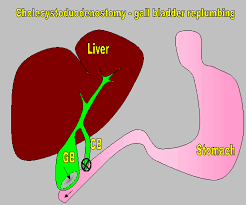
There are, of course, many more where that came from.
I would also like to add, what is not fun is not having a good way to shorten "apocrine gland adenocarcinoma of anal sac origin" and having to write that every time a professor talks about. (Note: I recently learned I could use AGASACA and it made my entire week)
Cholecystoduodenostomy
Hypergammaglobulinaemia
Oesophagogastroduodenoscopy
Parasympathomimetic
Pseudohyperparathyroidism
There are, of course, many more where that came from.
I would also like to add, what is not fun is not having a good way to shorten "apocrine gland adenocarcinoma of anal sac origin" and having to write that every time a professor talks about. (Note: I recently learned I could use AGASACA and it made my entire week)
Tuesday, 18 June 2013
Retrospection on Fledgling Doctor Me
In second year, we had a class called Mechanisms of Disease.
I have only just now, after reviewing this post, noticed I actually made a post on that class before. I just forgot to delete it from my notes so I wrote another one, but what I talked about there was totally different anyway.
It was explained as a way of getting our feet wet with clinical thinking. Even though we had no knowledge of diseases, pathology, or treatment, we were given weekly cases, a lab relevant to the case, and sort of guided through it. It didn't work super well, because every case was presented by a different clinician--some were really helpful, others had completely forgotten what it is like to know absolutely nothing about medicine.
We were divided up into groups, and every group was assigned one case. You didn't have any knowledge of what it would be about until the week of, and then you put together a presentation on the diagnosis for the Friday. They were big groups so this totally sucked. Some people had ten thousand words on their slides, some people repeated what other people said, the formatting was completely crazy on the powerpoints, and there was no coherence to what anyone was trying to say. Then of course when it is your turn, it is absolutely impossible to get 10-ish people to do their research and pool it together into a reasonable form by the end of the week. In our case, the professor in charge of us did a really unhelpful intro lecture, and to guide us in our presentation he told each person to pick what most interested us about the topic and talk about that. That is a good idea, but it results in a less-than-comprehensive discussion of the disease or diagnostic process, and a lot of inane details. Overall, I think the student presentations deserved an A for effort but were useless for learning.
In retrospect, we learned way more in that class than I thought we did at the time, and it was mostly because of the labs. That class was basically mini-medicine class. For instance, that class was the first time we ever read an ECG or looked at a urine dipstick. Now, in fourth year, our level of learning is that we would be expected to diagnose and work up the same sort of cases all by ourselves from start to finish--so it's interesting to think back and compare my mindset. We were so clueless back then!
I remember the first case reasonably well. It was a dog with hair loss, pot belly, and drinking and urinating excessively. The professor asked us what disease this was most likely to be and I had no clue. There was the one person who timidly asked, "Cushing's?" and the rest of us are wondering what Cushing's even is. If someone asked our class that now, it would be too easy. It's like the free points question.
More importantly, back then we especially had no clue on what to do to figure anything out. So I didn't know the specific disease name, but I also got stuck there. What do you even do? I guess bloods--doctors always take bloods for stuff. For the longest time, "bloods" was such a vague, I-know-we-should-do-this-but-not-why answer (then... enter the mysterious world of clin path).
Throughout third year, we had a class called Clinical Studies, and it was the next step up. We didn't have cases or anything like that, but it was essentially almost-medicine class. That's where we started learning things like how to do a physical exam. They hammered in clinical thinking techniques. Along with pathology, we were getting an idea of what diseases are out there, but I'd say we were still completely useless at medicine in general. What is the first thing you do? Take a history! Perfect. Problem is, there's no "Take A History" button, you have to actually think of the questions that you want answers to. Similar to "take bloods", the "take a history" response is more of a reflex than anything else.
Now we kind of sort of know medicine. The process to get from there to here was something like putting thousands of pages into a blender, opening up your brain, and pouring it in. It is coming out of our ears and we have a lot more to go!
Monday, 17 June 2013
Vet School Requires Costumes
Naturally, to keep ourselves from going insane, vet students like to party. Some more than others, but in general we get so little opportunity to let loose that the events we do have are a little ridiculous.
I don't know what it's like for other people, but we have an enormous amount of costume parties. The Happy Hours always have a theme, and some people go really all-out in the costumes. I mentioned the mentor-mentee happy hour already, where everyone comes in pairs as famous duos. Usually, they have a broader theme.
There are the classics like...
- Cowboys and Indians
- Ninjas and Pirates
- Traffic Lights
I guess normal people know this, but apparently for the traffic light one (I don't recall if that's what it's called), you don't actually dress up as traffic lights. You wear green if you're single, orange if you're "it's complicated," and red if you're in a relationship.
There are the fun but not unusual ones like...
- Black Light
- Around the World
- Harry Potter vs Lord of the Rings
- Jungle Fever
Then there are the silly ones like...
- Dream Job if I Wasn't a Vet
Where everyone wore their overalls or their lab coats and came up with something to fit. I guess most of us are a "mechanic" at heart.
Subscribe to:
Posts (Atom)